It seems that whenever I read an article on the state of poetry today the author inevitably dwells on the negative. They fixate on how poetry today is suffering from le grand malaise of apathy on the part of the reading public. I have yet to read a treatise on what is working well in today’s poetic scene and what is worthy in today’s state of poetry. Is all poetry truly tired and stagnant? Are all poets becoming more and more alike, surviving vicariously in a symbiotic, albeit poetically incestuous relationship with other poets? Have poets truly and completely lost the interest to even write for a general public? Would this purported public even care if they did? I have no answers to these questions.
What I do know is that I write for myself. I do not write & publish to acquire tenure; to impress my poet mentor; make my bones in an MFA program; receive fellowships, grants, and other subsidies or to garner poetry prizes that I can stick into my poetic hat. I agree that I am totally narcissistic when it comes to my poetry, but I also care a great deal about craft and I envy the MFA student that can devote so many hours in a day to poetics. I would like to be so steeped in poetics that I might see elements of poetry in every objectification that I encountered on a daily basis.
And yes in response to Barr’s point that almost all poets end up teaching, I too have worn the hat of teacher. But I have never defined myself as such. It was merely a means to an end. (Not that it left a discernible bad aftertaste in my mouth. Actually, I rather enjoyed it!) But I have never defined myself by that which engaged me in a remunerative activity. My educational background is in Sociology (M.A.) but I do not consider myself sociologist either. I refuse to let my social roles confine and pigeon-hole me. And so too, when it comes to my role as poet - (which is admittedly rather a small role in the grand scheme of it all), I refuse to be stereotyped.
Nature vs. Nurture & Poetic Careerism
There has been a longstanding point of contention among social scientists as to which variable: (nature or nurture) is more instrumental in determining the behavior and personality of the individual. What truly makes us who we are? Is the poet born or socially molded and socialized into one? Is the predisposition to develop into a poet based on our genetic or social makeup?
Barr clearly indicates that he feels that nature is the determinant factor in the poet’s evolution. Craft can be learned via MFA programs but we already come to these programs as writers. If anything these programs seem to mold the student in the likeness of the program’s mentor. Ergo; his assuredness that the next poetic Messiah will probably not be an MFA student. Whereas this lends an infinitesimally slight optimism to my personal history as poet, I cannot wholeheartedly accept this premise without any corroboration.
Nonetheless, I do agree that,” The creation of art is not a matter of fellowship. Writing a poem is a fiercely independent act. It is the furthest thing from mentors, residencies, and tenure.” The need to write does not (at least in my case) ever arise during a social event. It is a “sullen craft” that I ply alone. The words & elements of the “poem in vitro”, ebulliently bob to the surface of the conscious mindset when the need arises. And, yes, the urge to write is often something that I must assuage. Having said this I might, however, add that revision & critique is perhaps better suited to “fellowship”.
Write What You Know
I have always contended that any attempt at writing from another POV completely alien to one’s cognitive mindset is necessarily tinged by the subjective. We cannot help but imprint on all that we create the unique stamp of our subjectivity. To quote Anais Nin: “We don’t see things as they are, we see things as we are.” Our socio-cultural perspective precludes any true objectivity. As a social scientist conducting social research the quicker that we come to grips with this reality the more accurate our studies become.
Writing poetry appears to be no different. When Barr indicates that we must live broadly to write boldly I have a tendency to agree with him. As he posits: “…the poem one might get from a poet strolling past a construction site versus the poem one might get from the poet who is pouring concrete” will inevitably differ. Certainly the latter poet can bring more to the poetic table that the former. But where I disagree with Barr is in the extent that one must go to, to attain ”material” conducive to stimulate the creative juices. Writing about something or an event that is out of the ordinary in our reader’s life experience is simple enough. Writing about the commonplace in some profound way which deeply resonates with our reader is the more difficult of the two tasks. And it is precisely this incisiveness which demarcates the good poet from the exceptional one.
Great Poets & Great Audiences
“To have great poets, there must be great audiences too,” Barr quotes Whitman. But Whitman himself, self-published Leaves of Grass in 1855, as it had not garnered the critical acclaim that he had envisaged. Another of his contemporaries Emily Dickinson never even had an audience in her lifetime, let alone a great audience.
To reach a greater audience the poet perforce must be more accessible. Yet when a poet becomes accessible such as a Billy Collins or Ted Kooser, they are usually written off by academics & critics alike. Become a “popular poet” and you are disparaged by your peers. Write for your peers and the critics alike and you are considered too high-brow and inaccessible by a greater audience. There’s the catch-22.
Furthermore, in order to even attain any modicum of success in the Po-Biz you must be published in reputable literary magazines which are inevitably edited by individuals that more than likely have attended some form of writing program & thus will have probably acquired a preference for poetry with a more academic bent. It appears to be a cycle that cannot be easily broken.
In conclusion, Barr’s recommendation that, “Groundbreaking new art comes when artists make a changed assumption about their relationship to their audience, talk to their readers in a new way, and assume they will understand.”, is not likely to be realized if the poet is too busy writing for an audience that will inevitably publish and/or acclaim them. The poet is no position to change their relationship with this audience when their poetic success is contingent on the very group that decides whether they will achieve notoriety or remain in obscurity.
Thursday, September 07, 2006

The Drone of Modern Poetry – Deuxieme Partie
(An Outline of “ American Poetry in the New Century “ by John Barr .)
Part I – The Problem with Modern Poetry
- Modern poetry does not capture the way things are
- Reality outgrows the art form: the art form is no longer equal to the reality around it.
- Poetry is missing from everyday society & public dialogue in our: classrooms; bookstores; mainstream media
- A general interested public is poetry’s foremost need
- Lacking a general audience – poets still write for one another
- Since poets cannot support themselves by writing books & selling them to the general public; they end up teaching
- Academic life removes them even further from their public
- MFA students think that poetry has something to do with credentials
- Result: increase in the quantity of a poetry that is neither robust; resonant nor entertaining; a poetry that is limited in its variety; a poetry that both starves & flourishes on academic subsidies
- Poetry has a morale problem – But art should not be only about malfunction. Poetry need not come only from impairment.
- Poetry’s limitations today come not from failures of craft but from afflictions of spirit.
- Summation: The combined effects of public neglect and careerism, then, are intellectual and spiritual stagnation in the art form. … Attitude has replaced intellect.
Part II – The Next Era
- Poetry arises from what is intractable in the human spirit.
- A dead end is the fate that awaits any poetry that is not a record of the human spirit.
- Technical innovation [in poetry] for its own sake is like the tail that tries to wag the dog.
- I do believe the next era of poetry will not come from further innovations of form, but from an evolution of the sensibility on lived experience.
Poetry As a Career
- MFA programs can make a writer more knowledgeable in the traditions and the contemporary scope of the art, more accomplished in the craft of writing, more aware of the nimbus of critical commentary which surrounds and to some extent drives the art
- However, these programs carry pressures to succumb to the intimidations implicit in a climate of careerism. They operate on a network of academic postings and prizes that reinforce the status quo.
- They are sustained by a system of fellowships, grants, and other subsidies that a reader who is not a specialist might enjoy, might even buy.
- The MFA experience can confuse the writing of poetry, as a career, with the writing of a poem as a need or impulse.
- The creation of art is not a matter of fellowship. Writing a poem is a fiercely independent act. It is the furthest thing from mentors, residencies, and tenure.
- The one valid impulse to write a poem is not to impress but to share: wonder or anger or anguish or ecstasy. But always wonder.
- For the poet a sense of wonder is prerequisite to afford the possibility of the displacement of language into fresh response.
- Will the next Walt Whitman be an MFA graduate? Somehow it seems hard to imagine.
Write What You Live & Live What You Write
- the academic life can provide a perfectly good base of experience from which to write.
- But the effect of how we live on what we write—a linkage which seems to me very under-recognized today—suggests that if everyone teaches in order to support their writing needs, it follows that the breadth of the aggregate experience base available to poetry may suffer. In fact, with a few important exceptions, no major American poet has come from the academic world.
- Poetry, like a prayer book in the wind, should be open to all pages at once.
- It is the unconscious habit of poets to wait for the poem to come to them. Most contemporary poets align their role as writer with that of witness. They think of the artist as one more acted upon than acting.
- This is not to say, of course, that great poetry cannot come out of the most meager repository of lived experience. …The point rather is that poets today don't seem even to be aware that what they write will be influenced by how they live.
- When poets come to pay as much attention to how they live as to what they write, that may mark one new beginning for poetry.
- Poets should live broadly, then write boldly.
PART III – Change is Good For The Soul & The Poet
- Poetry, in its long history, has been all things to all people.
- The lyric poem by far dominates as the kind of poem written today.
- The sole function of the lyric poem, ubiquitous as its footprint has become, is to personalize the subject at hand.
- The ubiquity of the lyric poem today, to the exclusion of other modes of poetry, is another sign of poverty in the art form.
- In the eyes of those who succeed it, an age of poetry comes to be defined at least in part by what it was not.
- If the present era comes to be viewed by future readers as a time of worthy but not compelling poetry, it will not be for failures of craft.
- I don’t agree that our culture conspires to deny us our privacy, the quiet time it takes to read a poem.
- The human mind is a marketplace, especially when it comes to selecting one's entertainment.
- I think the responsibilities of the public to poetry are nil.
- Rather, I think the responsibilities are all on the part of poetry to its public.
- Poetry, coming from the other direction, must meet a standard of pleasure as well as profundity if it is to recover its place in American culture.
- Poetry needs to find its public again, and address it.
- Every poem implies its audience; our goal is to get that poem in front of its largest intended audience.
- In a golden age of poetry the audience will not be just the workshop, where poets write for other poets, or the classroom—both of which have provided crucial sanctuary to poetry during the past half century.
- Its audience will lie also in that world of non-poetry readers who come to discover its deep sustenance. "To have great poets, there must be great audiences too," Whitman said, and then he wrote for them.
- Groundbreaking new art comes when artists make a changed assumption about their relationship to their audience, talk to their readers in a new way, and assume they will understand.
---------------------------------------------------------------------------
Source: Poetry - September 2006
Tuesday, September 05, 2006
The Drone of Modern Poetry?
"American poetry is ready for something new because our poets have been writing in the same way for a long time now. There is fatigue, something stagnant about the poetry being written today. ...The manner of it has long been mastered. Modernism has passed into the DNA of the MFA programs. For all its schools and experiments, contemporary poetry is still written in the rain shadow thrown by Modernism. It is the engine that drives what is written today. And it is a tired engine. "
--------------------------------------------------------------------------John Barr
--------------------------------------------------
John Barr is president of the Poetry Foundation and has served on the boards of the Poetry Society of America, Yaddo, and Bennington College. His books include The Hundred Fathom Curve (1997) and Grace (1999), both from Story Line Press. (From - Poetry: September 2006)
--------------------------------------------------------------------------John Barr
--------------------------------------------------
John Barr is president of the Poetry Foundation and has served on the boards of the Poetry Society of America, Yaddo, and Bennington College. His books include The Hundred Fathom Curve (1997) and Grace (1999), both from Story Line Press. (From - Poetry: September 2006)
Friday, September 01, 2006
Louise Gluck
COPPER BEECH
Why is the earth angry at heaven?
If there's a question, is there an answer?
On Dana Street, a copper beech.
Immense, like the tree of my childhood,
but with a violence I wasn't ready to see then.
I was a child like a pointed finger,
then an explosion of darkness;
my mother could do nothing with me.
Interesting, isn't it,
the language she used.
The copper beech rearing like an animal.
Frustration, rage, the terrible wounded pride
of rebuffed love - I remember
rising from the earth to heaven. I remember
I had two parents,
one harsh, one invisible. Poor
clouded father, who worked
only in gold and silver.
-----------------------------------------------
From "The Seven Ages" by Louise Gluck; The Ecco Press: 2001
Thursday, August 31, 2006
Vox Populi
What do you think might improve this Blog?
The Blog is fine as is....................................................44%
What the hell are you talking about?..............................22%
More of my poetry.......................................................11%
More poetry from poets I admire...................................11%
More on poetics............................................................11%
Wednesday, August 30, 2006
Tuesday, August 29, 2006
The Latest From Frank Matagrano

I just received a copy of “There Is Nothing to Love about Los Angeles” (Pudding House Publications: 2006) from Frank Matagrano. This is the first book of poetry in a long time that I devoured upon the first reading. There is a decidedly Whitmanesque flavor to this with titles such as: “Song of Myself in a Hotel with a View of the Pacific Ocean”; Self Portrait With Beating Heart in Your Hands”; “Self Portrait with Another Man”; “Self Portrait with iPod” & “Allowing the Body to Finally Speak”. The poems are introspective and lyrical:
From the title poem:
There is nothing to love about Los Angeles
-----except the idea of leaving
My life in your hands, the idea of you
-----carrying it from one palm tree
to the next, stepping on stars
-----pinned to the sidewalk, stopping
Then from “Song of Myself in a Hotel with a View of the Pacific Ocean”
4.
I am a historian of hallway conversation.
-----I know word for word
How a knock-knock joke begins. I am
-----an expert at doors
From “Self Portrait With Beating Heart in Your Hands”
…There are too many
people to adore and I am
embarrassed to admit
that I do not remember
the names of everyone
who touched me.
& “Self Portrait with iPod”
My song is the kind you love
-----but would never admit
In mixed company. It’s like this
-----in heaven, too, where the lung creaks
Open like a rickety screen door
Or “In the Dim Television Show”
I carry a copy of the book you read,
--------the book of poems
--you once read to me. This way, I can live
with a connection, something
-------like organ music, say Bach
--coming from an alarm clock speaker.
-------I have to be
completely alone when I read
and I have to do it right
-------before bed if I want any say
in how the dream plays
----------itself out.
Finally from “22 Minutes”
There’s a radio station that will give you
-------the world if you will give them
-----twenty-two minutes. I had five, enough
to hear about a plague of Mormon crickets
-------that turned Utah roads blood red
-----and a thousand Iranians who took to the streets
of Tehran in the name of reform for the fifth night
-------in a row. On my road - and I couldn’t
-----tell you how many times I’ve gone
down it – reception grows weak the further you drive.
There is much to like here as each poem resonates with this reader on one level or another. The poems peel away the different layers of the self like an onion being carefully sliced ply after ply revealing a different aspect of the self until along with the speaker of each poem we arrive at the inner core. We find ourselves staring at a persona we may or may not have known existed. The discovery of the self is one that is devoutly to be wished as a cathartic journey – even if it not the persona we expected to find.
------------------------------------------------
P.S.: Thanks, Frank, for sending this one out to me.
Sunday, August 27, 2006

Wednesday, August 23, 2006
Just Give Me The Facts
Got these from an e-mail that's been going around the office:
------------------------------------------------
The first couple to be shown in bed together on prime time TV were Fred and Wilma Flintstone.
------------------------------------------------
Every day more money is printed for Monopoly than the U.S.Treasury.
------------------------------------------------
Men can read smaller print than women can; women can hear better.
------------------------------------------------
Coca-Cola was originally green.
------------------------------------------------
It is impossible to lick your elbow.
------------------------------------------------
The State with the highest percentage of people who walk to work: Alaska
------------------------------------------------
The percentage of Africa that is wilderness: 28% (now get this...)
------------------------------------------------
The percentage of North America that is wilderness: 38%
------------------------------------------------
The cost of raising a medium-size dog to the age of eleven: $6,400
------------------------------------------------
The average number of people airborne over the U.S. in any given hour: 61,000
------------------------------------------------
Intelligent people have more zinc and copper in their hair.
------------------------------------------------
The first novel ever written on a typewriter: Tom Sawyer.
------------------------------------------------
The San Francisco Cable cars are the only mobile National Monuments.
------------------------------------------------
Each king in a deck of playing cards represents a great king from history:
Spades - King David
Hearts - Charlemagne
Clubs -Alexander, the Great
Diamonds - Julius Caesar
-------------------------------------------------
111,111,111 x 111,111,111 = 12,345,678,987,654,321
--------------------------------------------------
If a statue in the park of a person on a horse has both front legs in the air, the person died in battle. If the horse has one front leg in the air the person died as a result of wounds received in battle. If the horse has all four legs on the ground, the person died of natural causes.
What I'm Reading
The Beauty of the Husband (a fictional essay in 29 tangos) -
Anne Carson (Knopf - New York - 2001)

The Seven Ages - Louise Gluck
The Ecco Press - 2001

What Are Big Girls Made of? - Marge Piercy
Knopf - New York - 1997

OMEROS - Derek Walcott
Farrar, Straus & Giroux - New York - 1990
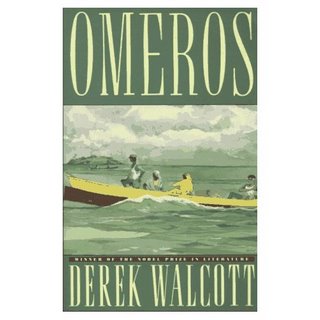
Anne Carson (Knopf - New York - 2001)
The Seven Ages - Louise Gluck
The Ecco Press - 2001

What Are Big Girls Made of? - Marge Piercy
Knopf - New York - 1997

OMEROS - Derek Walcott
Farrar, Straus & Giroux - New York - 1990
Tuesday, August 22, 2006
Back to Poetry
BACK
Ruth Daigon
Back
reversing the flow
back through the looking glass
up from the rabbit hole
in from out there.
Back
into the stunned silence
of snow, a gray quiet
a stripping clean to the roots
and our breath making perfect circles.
Back
to Main Street
with summer twilight
spreading like fire in dry grass,
the soft susurrus of a slow leak in the day.
My hands
stretching like antennae
now in this street now in that.
Back
to wrap that child's universe
around me once again
and warm this woman's frame.
HOW OLD WOULD YOU BE IF YOU DIDN'T KNOW HOW OLD YOU WAS?
(Satchel Paige)
A door in a sudden garden swings open
and everything comes back.
Ma's wheedling: C'mon Cookie.
Smile for the camera.
Sing a song.
The rock I'm standing on,
smooth
hot.
The sun bouncing off my Buster Brown,
I sing and Mr. Shucket
hands me a dollar.
Pa, just up from the city,
crouches in the lake
washing his arms past
his carpenter tan.
Then, swimming with eyes shut,
he splashes everyone.
Friday, I can hardly wait for Friday.
Every other day's like
jumping up and down
on one foot in the same spot
but Friday pa arrives from the city.
Friday the butcher come to kill chickens.
Stay in front, ma yells
from the back but I crawl
through dirt underneath the house
to watch the headless chickens dance.
I spin like them,
flop in the grass,
split a blade down the middle,
whistle through it
and the sun spills its miracles on me.
If I never learned to count,
I'd be back in that feathered time
with nothing to forget,
nothing to recall,
starting all over again.
-----------------------------------------
Ruth Daigon spent most of her life in the extreme climate of Winnipeg, Toronto, New York and Connecticut where her primary activity was singing as a Columbia Recording Artist, guest artist on CBS's Camera Three, soloist with the New York Pro Musica and in concert and recital appearances. When she sang at Dylan Thomas' funeral, she never dreamed that poetry would take over your life. Her collaboration with W.H. Auden to record Renaissance poetry and music for Columbia Records also gave no hint of what was to come--editing Poets On: for 20 years, contributing to major poetry journals and winning national awards like "The Eve of St. Agnes Award" (Negative Capability). Her latest poetry collection, Handfuls of Time, has just been published by Small Poetry Press. Her previous book, Payday at the Triangle, was published by Small Poetry Press.
Wednesday, August 16, 2006

Friday, August 11, 2006

Tuesday, August 08, 2006


The Long & Short of It
Apparently, according to Bill Knott "...short poems are not real poems, are they in the Norton, is there a short poem in David Lehman's anthols, he's the boss of poetry what he says goes and he says no to short poems, does Louise Gluck write short poems of course not, ergo the short poem is not a legitimate mode or form, ..."
Some of my best work (such as it is) might be considered abbreviated. Is in fact the short poem really that easily dismissed by poetry editors or is this a format that is ideal for the 21st century attention spans? I had always been taught that the economy of words in poetry is something "devoutly to be wished". Shouldn't a poem be measured on a PPL (Punch Per Line) or PPW (you figure it out) basis?
Apparently some people agree with me & thus they have launched a quarterly magazine devoted to mico poems & micro fiction - called you guessed it :
INCH
Submission Guidelines
Poetry: We are looking for smart, complete poems one to nine lines in length. Don't send us a good line or three-- send us a complete poem that bites, resonates, or sleeps with giants. Submit one to five poems with a cover letter. You may include more than one poem per page provided that you insert ample space in between. We do not accept previously published work or simultaneous submissions. Submit your work to Inch because it belongs in our magazine, not because you're desperate to place it somewhere. All rights revert to the author upon publication, though we will occasionally ask if we may reprint poems in our double-sized spectacular issues. Pays three copies. Submissions that include poems longer than nine lines in length will be read and ignored.
Fiction: Flash fiction. Microfiction. Call it what you will; Inch publishes the finest stories of 750 words or less. Submit one to three stories for consideration. Include a cover letter. All rights revert to the author upon publication, though we will occasionally ask if we may reprint fiction in our microfiction bonanza issues. Pays three copies.
Submissions should be addressed to the fiction or poetry editor's attention. Include SASE. Mail submissions to:
Inch / Bull City Press
1217 Odyssey Dr.
Durham, NC 27713
E-mail submissions are not accepted.
-------------------------------------------
Now, excuse me, I'm off to write some narrative poetry!
Some of my best work (such as it is) might be considered abbreviated. Is in fact the short poem really that easily dismissed by poetry editors or is this a format that is ideal for the 21st century attention spans? I had always been taught that the economy of words in poetry is something "devoutly to be wished". Shouldn't a poem be measured on a PPL (Punch Per Line) or PPW (you figure it out) basis?
Apparently some people agree with me & thus they have launched a quarterly magazine devoted to mico poems & micro fiction - called you guessed it :
INCH
Submission Guidelines
Poetry: We are looking for smart, complete poems one to nine lines in length. Don't send us a good line or three-- send us a complete poem that bites, resonates, or sleeps with giants. Submit one to five poems with a cover letter. You may include more than one poem per page provided that you insert ample space in between. We do not accept previously published work or simultaneous submissions. Submit your work to Inch because it belongs in our magazine, not because you're desperate to place it somewhere. All rights revert to the author upon publication, though we will occasionally ask if we may reprint poems in our double-sized spectacular issues. Pays three copies. Submissions that include poems longer than nine lines in length will be read and ignored.
Fiction: Flash fiction. Microfiction. Call it what you will; Inch publishes the finest stories of 750 words or less. Submit one to three stories for consideration. Include a cover letter. All rights revert to the author upon publication, though we will occasionally ask if we may reprint fiction in our microfiction bonanza issues. Pays three copies.
Submissions should be addressed to the fiction or poetry editor's attention. Include SASE. Mail submissions to:
Inch / Bull City Press
1217 Odyssey Dr.
Durham, NC 27713
E-mail submissions are not accepted.
-------------------------------------------
Now, excuse me, I'm off to write some narrative poetry!
Monday, August 07, 2006
Saturday, August 05, 2006
On The Right to Write Poetry
“I know I can’t write a poem. I have no right to write a poem. Mark Strand has the right to write a poem, not me. He went to Yale; he lives on the yacht of his youth. Me, I grew up in an orphanage, no family, no money, no “educational opportunities.” No background, no breeding. Scum like me can’t write poems. …Lower-class scum, menials like me have no right to write poetry. The occasion of a poem? You wanna know the fucking occasion? There is none for me. Strand and Williams and Pinsky et al. have “occasion.” I have no occasion.”
----------------------------------------------------------------------------Bill Knott
In the recent interview conducted by Robert Arnold - (editor of the on-line journal Memorious) - with Bill Knott, I’ve come across one of the most caustic diatribes denouncing the world of poetry that I’ve read recently. It is based on (if we are to believe the rhetoric) certain accomplishments he has failed to realize. But after considering his invective it appeared that there was in fact a flaw in his logic.
Knott comes to the conclusion that he is a failure due to what he states are irrefutable facts. i.e:
1-The Guggenheim Award is valueless since it has been given to “no-names”.
2 - It took him 35 years to receive award whereas other recipients achieve this in less time.
3 - Not selected for BAP (Best American poetry) or any other anthology.
4 - Books of poetry have not won any award of any type.
5 - Never invited to judge book contest.
6 - Received tenure at 55 years old, fifteen or twenty years after the successful poets of my generation
7 - The successful contemporary USA poet must have a publisher who stands behind and supports them:
8- Poets work must be in print and remain in print:
9 - Daniel Halpern will ask the successful poet to judge a book in his National Poetry Series:
Conclusion: These criteria are not matters of opinion, points of critical debate; they are factual data. Add them up and they measure failure.
I do not intend to argue here whether or not Bill Knott is a failure at poetry. That is a moot point. Most aspiring poets would gladly trade poetic places with him. The point is that poetic success is measurable in gradations and not in either absolute poetic triumph and/or defeat. The more interesting upshot of the above quote & the Memorious interview is that Knott appears to imply by his responses that success at poetry is determined by socio-economic status. His statement implies that an upper-class poetic voice is acceptable & viable whereas a lower-class poetic voice falls on deaf ears when it comes to the literary establishment.
Does in fact “Noblesse Oblige” give the poetic dilettante entitlements that it denies a lower-class counterpart? Are poets with poor & untraditional backgrounds really denied access to the higher rungs on the ladder up the poetic hierarchy? Are an MFA and proper breeding sufficient variables leading to an equation ensuring poetic success?
Of course to statistically determine if this assertion were true, it would entail conducting an in-depth study of the socio-economic backgrounds of published poets in various poetic journals; poets who received poetic awards; received tenure; have books published (& remain in print) by mainline publishing houses & be selected for renowned anthologies. To my knowledge such a study has not been engineered by any social scientist. It might be interesting though to see if any of Knott’s allegations hold water!
Bill Knott On:
Vanity Books
- Vanity books can’t be classified as publications.
- And one of the chief dangers. Vanity publishing is costly not just in terms of money. Its profligate habits can lead to the loss of judgment and value. It can mislead: it can cause me to be satisfied with work which is less than my best. I become self-indulgent, lazy; my standards are lowered. An outside editor would not accept what I’ve let pass.
- I intend to vanity-publish all my work on my blog, eventually, and to offer there my self-pub books in PDF files free to anyone who wants them. The “print” alternative has become impossible for me. In short, it’s my failure as a print poet that has led me to the Web. I wouldn’t be blog-publishing (vanity-publishing, PDF-publishing) if I had been successful as a print poet.
Writing Poetry
- I once dreamed of writing a line that I could put into every poem. A line that would fit into every poem I wrote, that would not be out of place no matter what the poem was.
The occasion of a poem? It makes me think of that quote from Henry James: “We work in the dark—we do what we can—we give what we have. Our doubt is our passion and our passion is our task. The rest is the madness of art.” Doubt seems to be my normal state which the poem or its origin suddenly and briefly overcomes. I know I can’t write a poem. I have no right to write a poem. Mark Strand has the right to write a poem, not me. He went to Yale; he lives on the yacht of his youth. Me, I grew up in an orphanage, no family, no money, no “educational opportunities.” No background, no breeding. Scum like me can’t write poems. After his Ivy League education, C. K. Williams lived in Paris on a trust fund for ten years while he wrote his first book; me, after high school and two years in the army I worked as a hospital orderly while I wrote my first book. Lower-class scum, menials like me have no right to write poetry. The occasion of a poem? You wanna know the fucking occasion? There is none for me. Strand and Williams and Pinsky et al. have “occasion.” I have no occasion.
American Poetry
- Poetry is so disesteemed and undervalued in this country that lots of poets compensate by assuming self-defensive repressive stances that internalize the hatred and scorn directed towards them. Poetry is disdained as trivial and sordid by society at large, by Puritanical political traditions. And poets respond often by considering these criticisms as valid, and try desperately to answer them and refute them by the high seriousness of their work. Their answer to being scoffed at by those above is to create a similar hierarchy in the sub-realm of poetry, in which its lower elements (the proletarian comic modes) are rejected and despised.
(“American” poetry is an illusion. It doesn’t exist. It never existed. “American” poets who write in English are Colonials, Diasporics, Offshoots, Sub-branches.)
Role as Poet
- But don’t you understand that that inability to commit to an esthetic is the root of my failure as a poet? It’s my lack of courage, really. I’ve been such a coward. Look at [Charles] Simic and Tate and compare them to me. Their courage and persistence, as opposed to my fear and wavering. Their lifelong devotion to a style. My cowardly abandonment, my desertion of every possibility. Jack of all modes, master of none, that’s me.
- “The same kind of poem from a particular poet” is what defines a strong poet, the opposite of a dilettante like me. Philip Levine is a great poet because he has had the courage and the strength to maintain his voice and his stylistic convictions through a lifetime of effort. Ditto Simic, Tate, [Sharon] Olds and others.
- One must create an established coherent poetic personality to be successful. And one must stick to that chosen persona or edifice. I don’t see Larkin ever deviating from his. As you read his Collected [Poems] you never suddenly find him trying to write something like [Ted] Hughes’ “Crow.” But turn my pages and you’ll find me trying to be [Karl] Krolow on one and Parra on the next. That’s why I’m a failure, and why I have come to the elephants’ graveyard of failure, the Web, to publish my poems. I’m posting all my poetry to my blog because ipso facto I have failed as a print poet. Facts are facts. I can’t console myself with spurious theories that will “demonstrate” anything I want them to.
Socialization, Self-Identification & Poetry
- Robert Arnold: "You use class as a metaphor a lot, it seems, and much has been made of your background—from the orphanage to your time in the army and then afterward as a poor hospital orderly. That time in your life seems almost mythological at this point, with Charles Simic and James Wright both writing anecdotes about it. How much does class, and your background specifically, figure into your identity as a poet?"
- My identity as a poet doesn’t exist, due to the class background you speak of. Every child at the orphanage knew they were on an assembly line that would shoot them out into the bondage of lower-class robot-slots; army, factory, the meniality of a desperate dead-end life….
Extra added attraction: When I was 15 years old [1955], the orphanage sent me to the state insane asylum at Elgin, Illinois, where I was incarcerated for a year. ...How I survived that hell I’ll never know, and in fact most of my time there I have blanked out of my mind. (Need I mention there was no schooling facility, no educational activities provided to me and the other teenagers there. Nor were we segregated or separated or safeguarded in any way from the general adult population, some of whom were psychotically harmful both to themselves and others. Yes, I can recall being beaten and pushed around and abused in the usual manner of such places.)
So what fucking “identity as a poet”? I don’t have an identity as a human being, much less a poet.
But what the hell, on the other hand, maybe the state insane asylum ...maybe that shit-hole wasn’t any worse really than Exeter or whatever prep-school in which Pinsky and Strand and Bidart and Charles Wright and C.K. Williams and William fucking Matthews were also suffering the traumas of their teen-angst years at the same time as me, back there in 1955….
- When I met Philip Levine in 1969, after my first book had been published, he was a tenured professor at Fresno State; I had spent the previous ten years earning a living as a menial hospital orderly/ bedpan jockey. Levine’s written 9,000 poems about the what, the one or two summers he worked as a manual laborer or factory hand, but I’ve never written a single line about my orderly decade. Nothing, no poem, no fragment of a poem about when I was fifteen years old incarcerated in the Elgin, Illinois, state insane asylum... Out of my “experiences,” barely nothing has emerged. Why? The answer is very simple: Levine is a great poet, and I’m not. He’s had the strength and the courage to remain open to and to retain his humanity, which I was not able to do. I’ve failed in every way to live up to that task.
- I wonder if my internment as a poet has been much different from those earlier incarcerations,... I don’t think so—it seems to me that the authorities of poetry, the overseers, the supervisors of poetry, have treated me with the same disdain and contempt and indifference as did the authorities of those other institutions. Maybe that’s why I became a poet, to ensure that I would continue to receive the brutality and neglect I had become accustomed to in my youth.
The Effect of Poetry
- I regret everything I had to do with poetry in my life. My involvement with it has brought nothing but unhappiness and bitterness.
- Maybe I could be thankful to have survived the unhappiness of the past if the unhappiness of the present wasn’t overwhelming me.
- I’d be happy to pay the price of the experience if the resulting poems were worth it, but they aren’t.
------------------------------------------------------------------
From: Robert Arnold - An Interview with Bill Knott - Memorious 6 - June 2006
Friday, August 04, 2006
Marge Piercy
Visiting a dead man on a summer day
In flat America, in Chicago
Graceland cemetery on the German North Side.
Forty feet of Corinthian candle
celebrate Pullman embedded
lonely raisin in a cake of concrete.
The Potter Palmers float
in an island parthenon.
Barons of hogfat, railroads and wheat
are postmarked with angels and lambs.
Forty feet of Corinthian candle
celebrate Pullman embedded
lonely raisin in a cake of concrete.
The Potter Palmers float
in an island parthenon.
Barons of hogfat, railroads and wheat
are postmarked with angels and lambs.
But the Getty tomb: white, snow patterned
in a triangle of trees swims dappled with leaf shadow,
sketched light arch within arch
delicate as fingernail moons.
The green doors should not be locked.
Doors of fern and flower should not be shut.
Louis Sullivan, I sit on your grave.
It is not now good weather for prophets.
Sun eddies on the steelsmoke air like sinking honey.
On the inner green door of the Getty tomb
(a thighbone's throw from your stone)
a marvel of growing, blooming, thrusting into seed:
how all living wreathe and insinuate
in the circlet of repetition that never repeats:
ever new birth never rebirth.
Each tide pool microcosm spiraling from your hand.
Sullivan, you had another five years
when your society would give you work.
Thirty years with want crackling in your hands.
Thirty after years with cities
flowering and turning grey in your beard.
All poets are unemployed nowadays.
My country marches in its sleep.
The past structures a heavy mausoleum
hiding its iron frame in masonry.
Men burn like grass
while armies grow.
Thirty years in the vast rumbling gut
of this society you stormed
to be used, screamed
no louder than any other breaking voice.
The waste of a good man
bleeds the future that's come
in Chicago, in flat America,
where the poor still bleed from the teeth,
housed in sewers and filing cabinets,
where prophets may spit into the wind
till anger sleets their eyes shut,
where this house that dances the seasons
and the braid of all living
and the joy of a man making his new good thing
is strange, irrelevant as a meteor,
in Chicago, in flat America
in this year of our burning.
-----------------------------------------------------------
From: "Circles on the Water: Selected Poems of Marge Piercy"
Alfred A. Knopf (1982)
Thursday, August 03, 2006
The Buzz
Mosquito
by Alex Lemon
You want evidence of the street
fight? A gutter-grate bruise & concrete scabs—
here are nails on the tongue,
a mosaic of glass shards on my lips.
I am midnight banging against housefire.
A naked woman shaking
with the sweat of need.
An ocean of burning diamonds
beneath my roadkill, my hitchhiker
belly fills sweet. I am neon blind & kiss
too black. Dangle stars—
let me sleep hoarse-throated in the desert
under a blanket sewn from spiders.
Let me be delicate & invisible.
Kick my ribs, tug my hair.
Scream You’re Gonna Miss Me
When I’m Gone. Sing implosion
to this world where nothing is healed.
Slap me, I’ll be any kind of sinner.
----------------------------------------------
from Mosquito: Poems Tin House Books (August 28, 2006)
"Mosquito" is Alex Lemon's first collection of poems. His poems have appeared or are forthcoming in numerous magazines including Tin House, Denver Quarterly, AGNI, Black Warrior Review, Gulf Coast and Pleiades. His translations (with Wang Ping) of a number of contemporary Chinese poets are forthcoming in Tin House, Artful Dodge, New American Writing and other journals. Among his awards are a 2005 Literature Fellowship in Poetry from the National Endowment for the Arts and a 2006 Minnesota Arts Board Grant. He is the assistant editor for LUNA: A Journal of Poetry and Translation and is a frequent contributor to The Bloomsbury Review. Currently, he teaches at Macalester College in St. Paul, Minnesota.
---------------------------------------------------------------------
P.S. I didn't realize that C.Dale posted the same poem today. However, I firmly believe it deserves the exposure.
Wednesday, August 02, 2006


Monday, July 31, 2006

Sunday, July 30, 2006
Thursday, July 27, 2006
Wednesday, July 26, 2006
You Gotta Minute...
I just received news from Sam Rasnake: editor of Blue Fifth Review that my poem "The Gathering" is slated to be published in the summer issue. Apparently the first e-mail that he sent me bounced. But Sam didn't give up and sent me another. Now hopefully, the e-mail I sent him got through. Thanks for your perseverance, Sam.
Tuesday, July 25, 2006
If I Had a Hammer………I’d Hammer Out a Chapbook Manuscript
Alright, so after weeding out more than half a dozen poems or so that just didn’t cut it - I’ve got about 25 poems that I’m comfortable sending out into the gauntlet of publishers and publishing houses. But it’s hard sending out these ingénue pomes out onto the literary seas without a rudder (so to speak). They need a captain at the helm that can steer the course to publication. I was imagining myself as Humphrey Bogart from “African Queen”, but am probably closer to being a Captain Merrill Stubing instead!
In an attempt to fulfill my navigational duties I’m trying to discern a common theme that runs throughout. The best I could come up with is that it was all written by the same schmuck. So I really tried to get into my work. Translation: I made hardcopies threw them on the floor and moved them around from one pile to another. This served as both meditation and my daily exercise. And as a bonus the hardwood floor got buffed.
I stared at them so long; I imagined them staring back. Then a thought popped into my head. This condition can be dangerous as thoughts do not generally make their way into my synaptic network due to the misfiring of my dendrites. (I knew I should have changed those spark plugs at 40K.)
After the synapses finally fired, what I came up with is that all poetry usually falls within broader categories. Duh! So why not just lump the poems according to their subject matter? I came up with this schema:
Death & Mysticism
Faith & Religion
The Surrealistic
Significant Others
The Human Condition
Self-Identification
You’ll notice that nature doesn’t play a big part in my poetry writing. It’s not that I’m not a naturalist or don’t appreciate nature; it’s just that the closest I get to nature is my father’s San Marsano tomato plants. Check that...Make that my father's San Marsano tomatoes!
What I’m wondering - just about now - is what other poets in the blogosphere primarily write about. Do we inevitably all end up writing about the same things? Hmm… Maybe Jung was on to something after all!
Wednesday, July 19, 2006
Arabesques Review Vol. II Issue 02

Arabesques Review Vol. II Issue 02 - ($13.95)
Includes writers such as Bill Teitelbaum, Sheila Murphy, Joseph Farina, Gordon Massman, Brent Powers, Ross Clark, Cortney Bledsoe, Ron Savage, Thomas Aiello, Steve Mayoff, JA Tyler, Nick Bruno, David Taylor, Owen Elmore, Davide Trame, Socorro Venegas, Les Merton, Carl Palmer, Mary Hamrick, Michael Blottenberger, Christopher Woods, Penny Feeny, Jose Manuel Sevilla, Jai Clare, Gary Lehmann, Paul Murphy, Leonardo Guevara Navarro, Azza El Wakeel, Christopher Woods, Lucia Leao, Jason Heroux, Dimitris Kraniotis, Domenico Capilongo and Arash Farzanah all appear in the pages of Arabesques' new special "Anthology" issue. "Identities" is a unique "cultural book" which has been published with the contributions of many talented artists from all corners of the planet.

Sunday, July 16, 2006
Saturday, July 15, 2006


Wednesday, July 12, 2006
Tuesday, July 11, 2006
I’m Still a Virgin…
When it Comes to Publishing a Chapbook or a “Full Length” Collection of Poetry.
By the way what the hell is a “full length” collection anyway? Are we talking poems or pages here? Does one really long poem (100+ pages) constitute a “full length” collection or not? How about 300 haikus? What about the term “chapbook”? The term always sounded kind of uncomfortable if you ask me. It sounds as if I should be applying some kind of balm to it; or take the poor thing to see a dermatologist. Never mind…. In any case, I now have enough published poems to put together a manuscript for a “chapbook”.
Thing is I’ve only been at this “PoBiz” for about five years. Furthermore, I never thought when I started out that I’d ever even be published in poetry journals, let alone entertain the prospect that my work might appear in a book of poetry or an anthology. For me it has always been about the poetry. I never really was in a hurry to publish a chapbook or collection, just for the sake of publishing! I mean – yeah… I’d like the look of my moniker imprinted in bold letters on several hundred copies of an expertly bound, exquisitely presented chapbook. But then again who wouldn’t?
This has been an interesting journey. On my return from Italy in 2000, I started out posting & critiquing poetry on-line. The venues I frequented are too many to name here. But it wasn’t until I started posting at the Gazebo that I really got a kick in the proverbial poetic shins. The experience kick-started my enduring interest in poetry. During the 3 odd years that I participated there I published quite a few poems. I am not a prolific writer, by any stretch of the imagination, but I was fortunate enough to have most of my poems find a home as it were.
Now 35+ published poems later, I feel like I have enough material for a chapbook. Problem is - & I’m serious about this – I really need some help with putting together a manuscript. The poems only span five years of writing but I believe that my writing style & voice really changed over that short period of time. Therefore, I’m not really sure if & how to incorporate these varied stages of development into a marketable manuscript. So, if you’re interested in a challenge, boy have I got one for you!
------------------------------------------------
Addendum: For readers requiring further explication of the marketing of the Chapbook - the following article from Pudding House Press might be of interest: Chapbooks — Flying Like Hummingbirds Exciting the Air Around Them (MARKETING YOUR CHAPS WITH LIMITED IF ANY HELP FROM THE PUBLISHER) can be found in the main directory under the heading: "Chapbook Marketing a How-To"!
Sunday, July 09, 2006

That's Just The Way it Goes.
After receiving the nod for publication of three of my poems from The Arabesques Review , I received a great letter from Neil Aitken, editor of Boxcar Poetry Review. In it, he basically apologizes that due to his recent move back to Canada, (Welcome back, Neil!) , he was unable to pick up one of the poems selected - "No. 249 on the S.S. Saturnia". Neil thanks for the shot in the arm. I really needed that.
Well, I know one journal that I will be considering for future submissions. Actually, here is the lineup of poets in the recent edition:
Rob Baum, Jared Carter, Iris Dunkle, Joseph Farina, Larry Fontenot, Giles Goodland, Anne Haines, Zoë Landale, Alexander Long, Harold Lorin, Benjamin Morris, Patrick Rosal.
Great lineup. Check it out!
Well, I know one journal that I will be considering for future submissions. Actually, here is the lineup of poets in the recent edition:
Rob Baum, Jared Carter, Iris Dunkle, Joseph Farina, Larry Fontenot, Giles Goodland, Anne Haines, Zoë Landale, Alexander Long, Harold Lorin, Benjamin Morris, Patrick Rosal.
Great lineup. Check it out!
Friday, July 07, 2006
"We don't see things as they are we see things as we are." (Anais Nin)
THE VOICE YOU HEAR WHEN YOU READ SILENTLY
by Thomas Lux
is not silent, it is a speaking-
out-loud voice in your head: it is spoken,
a voice is saying it
as you read. It's the writer's voice,
of course, in a literary sense
his or her "voice" but the sound
of that voice is the sound of your voice.
Not the sound your friends know
or the sound of a tape played back
but your voice
caught in the dark cathedral
of your skull, your voice heard
by an internal ear informed by internal abstracts
and what you know by feeling, having felt. It is your voice
saying, for example, the word "barn"
that the writer wrote
but the "barn" you say
is a barn you know or knew. The voice
in your head, speaking as you read,
never says anything neutrally -- some people
hated the barn they knew,
some people love the barn they know
so you hear the word loaded
and a sensory constellation is lit: horse-gnawed stalls,
hayloft, black heat tape wrapping
a water pipe, a slippery
spilled chirrr of oats from a split sack,
the bony, filthy haunches of cows . . .
And "barn" is only a noun -- no verb
or subject has entered into the sentence yet!
The voice you hear when you read to yourself
is the clearest voice: you speak it
speaking to you.
--------------------------------------------------------------
From : New and Selected Poems of Thomas Lux : 1975-1995 (Mariner Books)
Tuesday, July 04, 2006
Three of my Poems Get Picked up.
The Arabesques Review has accepted three of my poems for publication. The poems in question are: “The 30Hz Hypothesis" (which was previously published in Shenandoah in 2005), "The Shroud" and "N° 249 on the S.S. Saturnia”. Kinda excited about this as I haven't been sending out many submissions lately.
Monday, July 03, 2006
"McPoems"
" The democratic nature [of poetry] is best exemplified in the prevalence of the creative writing workshop where poems are subjected to a majority rule rather than the individual voice of the poet. This "poetry by committee" results in poems that have been mediocratized to the point that they all begin to look alike, and any sense of an individual voice is lost.
Donald Hall calls these workshop generations, "McPoems." As Doug Treem once said, "It's like using McDonald's to rid the world of hunger." One cannot cure society's ills by force feeding them food lacking in substance". Rather, we hear Kenneth Patchen's admonishment: "The one who comes to question himself has cared for mankind." Poets must search within themselves in order to tap into the Muse and allow it to flourish in their lives and more importantly in the life of their poetry. It is this inward going, as Rainer Maria Rilke admonishes when he says "go into yourself," that is missing in contemporary American poetry. "
----------------— Raymond P. Hammond: Editor of The NewYork Quarterly
Donald Hall calls these workshop generations, "McPoems." As Doug Treem once said, "It's like using McDonald's to rid the world of hunger." One cannot cure society's ills by force feeding them food lacking in substance". Rather, we hear Kenneth Patchen's admonishment: "The one who comes to question himself has cared for mankind." Poets must search within themselves in order to tap into the Muse and allow it to flourish in their lives and more importantly in the life of their poetry. It is this inward going, as Rainer Maria Rilke admonishes when he says "go into yourself," that is missing in contemporary American poetry. "
----------------— Raymond P. Hammond: Editor of The NewYork Quarterly
Sunday, July 02, 2006
Poetry by Committee?
Suzanne Frischkorn’s latest post: “Who Do You Share Your Poems With?”, is an intriguing one. It forced me to answer a question that exploded (or perhaps imploded) into many other concerns with regards to poetics & my poetry. I found the responses to the question posed by Suzanne at least as interesting as the original one.
What is implicit in the query is the importance of the process of revision that every poet must face when considering an early draft of a poem or one that is in the “not just there yet” category. The question here is: Is feedback a necessary evil (or an evil at all for that matter)? Some of the poets that responded to the question believe that a reader’s reaction to their work is beneficial while others would rather figure it out themselves trying to exclude the possibility that their poetry be tinged (tainted?) by an outside source.
Is a poem that we receive feedback to - no longer “our” poem? Do we sacrifice originality, perhaps even our voice & style - when we open the door to outside critique? What role, if any, should critique of our poetry play in the creative process? Or is critique “anti-creative” leading to a “poetry by committee” paradigm? These concerns all crossed my mind during my scrutiny of the issue.
Yet poets have been critiquing each other’s work for centuries. Surely, this poetic tradition cannot be valueless. I hope to come back to this & post a further analysis.
What is implicit in the query is the importance of the process of revision that every poet must face when considering an early draft of a poem or one that is in the “not just there yet” category. The question here is: Is feedback a necessary evil (or an evil at all for that matter)? Some of the poets that responded to the question believe that a reader’s reaction to their work is beneficial while others would rather figure it out themselves trying to exclude the possibility that their poetry be tinged (tainted?) by an outside source.
Is a poem that we receive feedback to - no longer “our” poem? Do we sacrifice originality, perhaps even our voice & style - when we open the door to outside critique? What role, if any, should critique of our poetry play in the creative process? Or is critique “anti-creative” leading to a “poetry by committee” paradigm? These concerns all crossed my mind during my scrutiny of the issue.
Yet poets have been critiquing each other’s work for centuries. Surely, this poetic tradition cannot be valueless. I hope to come back to this & post a further analysis.
Friday, June 30, 2006
"On a Larkin"
The Whitsun Weddings
by Philip Larkin
That Whitsun, I was late getting away:
Not till about
One-twenty on the sunlit Saturday
Did my three-quarters-empty train pull out,
All windows down, all cushions hot, all sense
Of being in a hurry gone. We ran
Behind the backs of houses, crossed a street
Of blinding windscreens, smelt the fish-dock; thence
The river's level drifting breadth began,
Where sky and Lincolnshire and water meet.
All afternoon, through the tall heat that slept
For miles inland,
A slow and stopping curve southwards we kept.
Wide farms went by, short-shadowed cattle, and
Canals with floatings of industrial froth;
A hothouse flashed uniquely: hedges dipped
And rose: and now and then a smell of grass
Displaced the reek of buttoned carriage-cloth
Until the next town, new and nondescript,
Approached with acres of dismantled cars.
At first, I didn't notice what a noise
The weddings made
Each station that we stopped at: sun destroys
The interest of what's happening in the shade,
And down the long cool platforms whoops and skirls
I took for porters larking with the mails,
And went on reading. Once we started, though,
We passed them, grinning and pomaded, girls
In parodies of fashion, heels and veils,
All posed irresolutely, watching us go,
As if out on the end of an event
Waving goodbye
To something that survived it. Struck, I leant
More promptly out next time, more curiously,
And saw it all again in different terms:
The fathers with broad belts under their suits
And seamy foreheads; mothers loud and fat;
An uncle shouting smut; and then the perms,
The nylon gloves and jewellery-substitutes,
The lemons, mauves, and olive-ochres that
Marked off the girls unreally from the rest.
Yes, from cafés
And banquet-halls up yards, and bunting-dressed
Coach-party annexes, the wedding-days
Were coming to an end. All down the line
Fresh couples climbed aboard: the rest stood round;
The last confetti and advice were thrown,
And, as we moved, each face seemed to define
Just what it saw departing: children frowned
At something dull; fathers had never known
Success so huge and wholly farcical;
The women shared
The secret like a happy funeral;
While girls, gripping their handbags tighter, stared
At a religious wounding. Free at last,
And loaded with the sum of all they saw,
We hurried towards London, shuffling gouts of steam.
Now fields were building-plots, and poplars cast
Long shadows over major roads, and for
Some fifty minutes, that in time would seem
Just long enough to settle hats and say
I nearly died,
A dozen marriages got under way.
They watched the landscape, sitting side by side
- An Odeon went past, a cooling tower, And
someone running up to bowl - and none
Thought of the others they would never meet
Or how their lives would all contain this hour.
I thought of London spread out in the sun,
Its postal districts packed like squares of wheat:
There we were aimed. And as we raced across
Bright knots of rail
Past standing Pullmans, walls of blackened moss
Came close, and it was nearly done, this frail
Travelling coincidence; and what it held
stood ready to be loosed with all the power
That being changed can give. We slowed again,
And as the tightened brakes took hold, there swelled
A sense of falling, like an arrow-shower
Sent out of sight, somewhere becoming rain.
------------------------------------------------------
From THE WHITSUN WEDDINGS (1964) - Faber & Faber, UK
Thursday, June 29, 2006
If Your Blog or Your Ego Needs a Boost!
Try the "Page Boost Generator":
Review of - "They Shoot Poets - Don't They?"
I just saw "They Shoot Poets - Don't They?". Gee. It must have taken many years to finalize the page. Beautiful. The HTML source is valid. Of course, I expected the creator to create something superior. Seeing They Shoot Poets - Don't They?, I'm simply full of respect. The page contains 231 links, a perfect amount. (...)
The URL has 34 characters. That's just the right size. Also, put up a link to this page. If only my friend's company would have a great page like that. What a superb page! There are 54,146 characters in the document, which is a swell length for search engines. The color scheme is very balanced. I knee down before the creator of this web page!"
-- Fred Robertson, "YourWeb Monthly"
Review of - "They Shoot Poets - Don't They?"
I just saw "They Shoot Poets - Don't They?". Gee. It must have taken many years to finalize the page. Beautiful. The HTML source is valid. Of course, I expected the creator to create something superior. Seeing They Shoot Poets - Don't They?, I'm simply full of respect. The page contains 231 links, a perfect amount. (...)
The URL has 34 characters. That's just the right size. Also, put up a link to this page. If only my friend's company would have a great page like that. What a superb page! There are 54,146 characters in the document, which is a swell length for search engines. The color scheme is very balanced. I knee down before the creator of this web page!"
-- Fred Robertson, "YourWeb Monthly"
Wednesday, June 28, 2006
Friday, June 23, 2006
Niagra Falls...Eh!
View From Rainbow Bridge at Dusk!


Niagara Falls or Bust!
Going to see the falls this weekend.
Hopefully, I'll be back refreshed.
If I'm not back start without me.


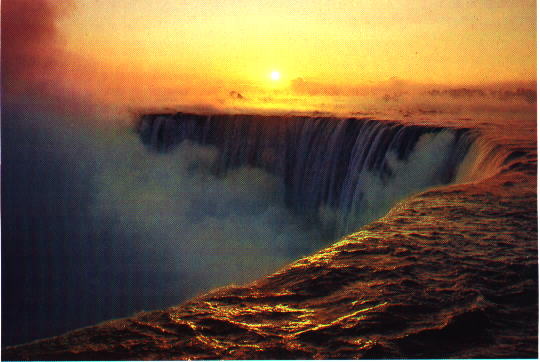
Niagara Falls or Bust!
Going to see the falls this weekend.
Hopefully, I'll be back refreshed.
If I'm not back start without me.
You Got That Right...You Sure Got That Right!

Poets 101.com "... isn't a city, town, borough or municipal corporation*, but it is a playing field for the ever growing community of blogging poets. so many of them (if not all) encouraged and collected by one Billy the Blogging Poet. and if all those words (city, town, borough...) have one thing in common, it's that they build up around a collection of people, a community. therefore, let Poets101.com be out make believe city, the town hall, the swing set behind the movie theatre, whatever. it's there and it's ours. and i'm taking it upon myself to make billy the mayor the swing set!"
------------------------------------------------------------------------------Katy
Tuesday, June 20, 2006
Monday, June 19, 2006
A Cup of Java? - I'm a Tea Drinker Myself!...
And so is Paul!
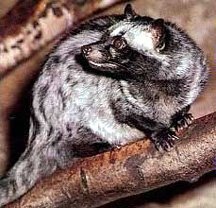
The Kopi Luwak Story
The Luwak (Paradoxurus hermaphroditus) denizen of the coffee (kopi) plantations of Java, Sumatra, and Sulawesi, eats only the ripest coffee cherries. Unable to digest the coffee beans, the Luwak graciously deposits them on the jungle floor where they are eagerly collected by the locals. The stomach acids and enzymatic action involved in this unique fermentation process produces the beans for the world’s rarest coffee beverage.
The Byproduct Sold at $75 per quarter pound:
Saturday, June 17, 2006
Jorie Graham
MIND
The slow overture of rain,
each drop breaking
without breaking into
the next, describes
the unrelenting, syncopated
mind. Not unlike
the hummingbirds
imagining their wings
to be their heart, and swallows
believing the horizon
to be a line they lift
and drop. What is it
they cast for? The poplars,
advancing or retreating,
lose their stature
equally, and yet stand firm,
making arrangements
in order to become
imaginary. The city
draws the mind in streets,
and streets compel it
from their intersections
where a little
belongs to no one. It is
what is driven through
all stationary portions
of the world, gravity's
stake in things, the leaves,
pressed against the dank
window of November
soil, remain unwelcome
till transformed, parts
of a puzzle unsolvable
till the edges give a bit
and soften. See how
then the picture becomes clear,
the mind entering the ground
more easily in pieces,
and all the richer for it.
----------------------------------------
Graham is the author of numerous collections of poetry, including Overlord (HarperCollins, 2005); Never (HarperCollins, 2002); Swarm (2000); The Errancy (1997); The Dream of the Unified Field: Selected Poems 1974-1994, which won the 1996 Pulitzer Prize for Poetry; Materialism (1993); Region of Unlikeness (1991); The End of Beauty (1987); Erosion (1983); and Hybrids of Plants and of Ghosts (1980). She has also edited two anthologies, Earth Took of Earth: 100 Great Poems of the English Language (1996) and The Best American Poetry 1990.
To read a review of Overlord in The Guardian, click here: http://books.guardian.co.uk/review/story/0,,1717013,00.html
The slow overture of rain,
each drop breaking
without breaking into
the next, describes
the unrelenting, syncopated
mind. Not unlike
the hummingbirds
imagining their wings
to be their heart, and swallows
believing the horizon
to be a line they lift
and drop. What is it
they cast for? The poplars,
advancing or retreating,
lose their stature
equally, and yet stand firm,
making arrangements
in order to become
imaginary. The city
draws the mind in streets,
and streets compel it
from their intersections
where a little
belongs to no one. It is
what is driven through
all stationary portions
of the world, gravity's
stake in things, the leaves,
pressed against the dank
window of November
soil, remain unwelcome
till transformed, parts
of a puzzle unsolvable
till the edges give a bit
and soften. See how
then the picture becomes clear,
the mind entering the ground
more easily in pieces,
and all the richer for it.
----------------------------------------
Graham is the author of numerous collections of poetry, including Overlord (HarperCollins, 2005); Never (HarperCollins, 2002); Swarm (2000); The Errancy (1997); The Dream of the Unified Field: Selected Poems 1974-1994, which won the 1996 Pulitzer Prize for Poetry; Materialism (1993); Region of Unlikeness (1991); The End of Beauty (1987); Erosion (1983); and Hybrids of Plants and of Ghosts (1980). She has also edited two anthologies, Earth Took of Earth: 100 Great Poems of the English Language (1996) and The Best American Poetry 1990.
To read a review of Overlord in The Guardian, click here: http://books.guardian.co.uk/review/story/0,,1717013,00.html
Thursday, June 15, 2006
Into Hall
Je Suis Une Table
by Donald Hall *
It has happened suddenly,
by surprise, in an arbor,
or while drinking good coffee,
after speaking, or before,
that I dumbly inhabit
a density; in language,
there is nothing to stop it,
for nothing retains an edge.
Simple ignorance presents,
later, words for a function,
but it is common pretense
of speech, by a convention,
and there is nothing at all
but inner silence, nothing
to relieve on principle
now this intense thickening.
----------------------------------------------------
* From White Apples and the Taste of Stone : Selected Poems 1946-2006
"Donald Hall was born in New Haven, Connecticut, in 1928, the only child of Donald Andrew Hall (a businessman) and his wife Lucy (née Wells). He was educated at Phillips Exeter, New Hampshire, and at the Universities of Harvard, Oxford and Stanford.
Hall began writing even before reaching his teens, beginning with poems and short stories, and then moving on to novels and dramatic verse. He recalls the powerful influence on his youthful imagination of Edgar Allan Poe: 'I wanted to be mad, addicted, obsessed, haunted and cursed. I wanted to have deep eyes that burned like coals - profoundly melancholic, profoundly attractive.' "
Friday, June 09, 2006
I'm in a Wistful State of Mind.
Nostalgia
Nostalgia is more commonly referred to not as a medical condition or a field of study, but as a feeling that any normal person can have. Nostalgia can often be associated with a fond childhood memory, a certain game or a treasured personal object.
Studies show that many people believe that years or decades past people were better off than they are now, and that there had been a higher standard of living then, even if this is not always the case. This belief can be very characteristic of nostalgia, of the "good ol' days." Items in Pop Culture can often trigger a strong feeling of nostalgia. TV shows like Lost In Space and Moon Pies can bring back memories of the space age. *
----------------------------------------------------------------------(courtesy Wikipedia)
As of late I'm in a nostalgic mood. Songs & visuals that usually did not evoke any response from me are somehow triggering or firing the medial temporal lobes (MTL). The fireworks of emotion are palpable. Sometimes the memory is pleasant conjuring aromas, sounds, sensations, places & people from my past. Others would best be left submerged in some murky neural sconce. Still I suppose that they are part and parcel. Here is some of the baggage that I still carry for better or worse:
25- Gilligan's Island : You'd figure that seven adults would be able to get off that island what with all the traffic of persons we saw from week to week.
24- Gomer Pyle: "Shazaaaaam!"
23- Mission Impossible: Gotta like that theme music & the self-destructing envelopes.
22- Honey Mooners: " Alice!!!..." & "You're a riot, Alice, a regular riot. "
21- Dark Shadows: Just like the name: Barnabas Collins - for some reason. Vampiric Soap Opera.
20- Invaders: "The Invaders - Alien beings from a dying planet Their destination - The Earth. Their purpose - To make it their world "- As far as I'm concerned, as long as they depose Bush they're welcome to it. Come to think of it doesn't Bush have a crooked 4th finger.
19- Man From U.N.C.L.E.: "Man From UNCLE" a spy show featuring Napoleon Solo & Ilya Kuryakin which begat "The Girl from UNCLE" which thankfully did not beget "Aunt From UNCLE".
18- Bonanza: Four bachelors & a Chinese cook. No wonder Hop Sing was always skittish.
17- Ed Sullivan: Where else could you see the Beatles, Rolling Stones, Jim Morrison, Tiny Tim & Topo Gigio all on the same stage "tiptoeing through the tulips".
16- Lost in Space: Warning!...Warning!!...Warning!!! -Robbie the Robot was ostensibly the best actor in the cast.
15- Batman: Holy ""Same bat time. Same bat channel!" , Batman!
14- Hogan's Heroes: You gotta hand it to the writers - turning a World War II Nazi POW camp into a comedy sitcom is either very gutsy or very stupid.
13- Alfred Hitchcock Presents: Alfred Hitchcock Quote -"Television has brought murder back into the home - where it belongs".
12- Avengers: Introducing a TV audience to a notable fetishistic undercurrent in many episodes - black leather, a whip & "kinky boots".
11- Green Hornet: Bruce Lee as "Kato" was well worth the price of admission.
10- M.A.S.H.: Hawkeye, Hotlips, Klinger in drag et al...Gotta Love it!
9- Bewitched: Any of the original episodes makes the Ferrell & Kidman vehicle look bad.
8- Secret Agent: Johnny Rivers rendition of the theme song & Patrick McGoohan's deadpan delivery hit home.
7- Twilight Zone: Do you want to see something really scary?
6- Outer Limits: Please do not adjust your sets.
5- Munsters: Talk about marriages that last - Herman & Lily Munster have been married for 100 years.
4- Addams Family: When "Cousin It" started making sense I got worried.
3- Beverly Hillbillies: I think I'll "set a spell" around the "cee-ment pond".
2- Get Smart: "Missed it by that much."
1- Star Trek: "Live long and prosper."
Say This Once...Real Slow!
pneumonoultramicroscopicsilicovolcanoconiosis
noun:
(NOO-muh-noh-UL-truh-MY-kruh-SKOP-ik-SIL-i-koh-VOL-kay-no-koh-NEE-o-sis, nyoo-)
A lung disease caused by inhaling fine particles of silica.[From New Latin, from Greek pneumono- (lung) + Latin ultra- (beyond,extremely) + Greek micro- (small) + -scopic (looking) + Latin silico(like sand) + volcano + Greek konis (dust) + -osis (condition).]
By any other name this would still be unpronounceable.
Tuesday, June 06, 2006

Monday, June 05, 2006
Body Language
The Body
by Marianne Boruch
has its little hobbies. The lung
likes its air best after supper,
goes deeper there to trade up
for oxygen, give everything else
away. (And before supper, yes,
during too, but there’s
something about evening, that
slow breath of the day noticed: oh good,
still coming, still going ... ) As for
bones—femur, spine,
the tribe of them in there—they harden
with use. The body would like
a small mile or two. Thank you.
It would like it on a bike
or a run. Or in the water. Blue.
And food. A habit that involves
a larger circumference where a garden’s
involved, beer is brewed, cows
wake the farmer with their fullness,
a field surrenders its wheat, and wheat
understands I will be crushed
into flour and starry-dust
the whole room, the baker
sweating, opening a window
to acknowledge such remarkable
confetti. And the brain,
locked in its strange
dual citizenship, idles there in the body,
neatly terraced and landscaped.
Or left to ruin, such a brain,
wild roses growing
next to the sea. The body is
gracious about that. Oh, their
scent sometimes. Their
tangle. In truth, in secret,
the first thing
in morning the eye longs to see.
-------------------------------------------
Marianne Boruch’s most recent books are Poems: New and Selected (Oberlin College Press, 2004) and In the Blue Pharmacy (Trinity University Press, 2005), her second collection of essays on poetry. She teaches at Purdue University.
[From "Poetry" - June 2006]
by Marianne Boruch
has its little hobbies. The lung
likes its air best after supper,
goes deeper there to trade up
for oxygen, give everything else
away. (And before supper, yes,
during too, but there’s
something about evening, that
slow breath of the day noticed: oh good,
still coming, still going ... ) As for
bones—femur, spine,
the tribe of them in there—they harden
with use. The body would like
a small mile or two. Thank you.
It would like it on a bike
or a run. Or in the water. Blue.
And food. A habit that involves
a larger circumference where a garden’s
involved, beer is brewed, cows
wake the farmer with their fullness,
a field surrenders its wheat, and wheat
understands I will be crushed
into flour and starry-dust
the whole room, the baker
sweating, opening a window
to acknowledge such remarkable
confetti. And the brain,
locked in its strange
dual citizenship, idles there in the body,
neatly terraced and landscaped.
Or left to ruin, such a brain,
wild roses growing
next to the sea. The body is
gracious about that. Oh, their
scent sometimes. Their
tangle. In truth, in secret,
the first thing
in morning the eye longs to see.
-------------------------------------------
Marianne Boruch’s most recent books are Poems: New and Selected (Oberlin College Press, 2004) and In the Blue Pharmacy (Trinity University Press, 2005), her second collection of essays on poetry. She teaches at Purdue University.
[From "Poetry" - June 2006]
Now Why Didn't I Think of That?
| You Should Get a PhD in Liberal Arts (like political science, literature, or philosophy) |
 You're a great thinker and a true philosopher. You'd make a talented professor or writer. |
Saturday, June 03, 2006
You Say It's Your Birthday.
Parent's Pantoum
Carolyn Kizer
for Maxine Kumin
Where did these enormous children come from,
More ladylike than we have ever been?
Some of ours look older than we feel.
How did they appear in their long dresses
More ladylike than we have ever been?
But they moan about their aging more than we do,
In their fragile heels and long black dresses.
They say they admire our youthful spontaneity.
They moan about their aging more than we do,
A somber group--why don't they brighten up?
Though they say they admire our youthful spontaneity
They beg us to be dignified like them
As they ignore our pleas to brighten up.
Someday perhaps we'll capture their attention
Then we won't try to be dignified like them
Nor they to be so gently patronizing.
Someday perhaps we'll capture their attention.
Don't they know that we're supposed to be the stars?
Instead they are so gently patronizing.
It makes us feel like children--second-childish?
Perhaps we're too accustomed to be stars.
The famous flowers glowing in the garden,
So now we pout like children. Second-childish?
Quaint fragments of forgotten history?
Our daughters stroll together in the garden,
Chatting of news we've chosen to ignore,
Pausing to toss us morsels of their history,
Not questions to which only we know answers.
Eyes closed to news we've chosen to ignore,
We'd rather excavate old memories,
Disdaining age, ignoring pain, avoiding mirrors.
Why do they never listen to our stories?
Because they hate to excavate old memories
They don't believe our stories have an end.
They don't ask questions because they dread the answers.
They don't see that we've become their mirrors,
We offspring of our enormous children.
-------------------------------------------------------------
Buon Compleanno Elizabeth Bruno
Friday, June 02, 2006
Forbidden Poster
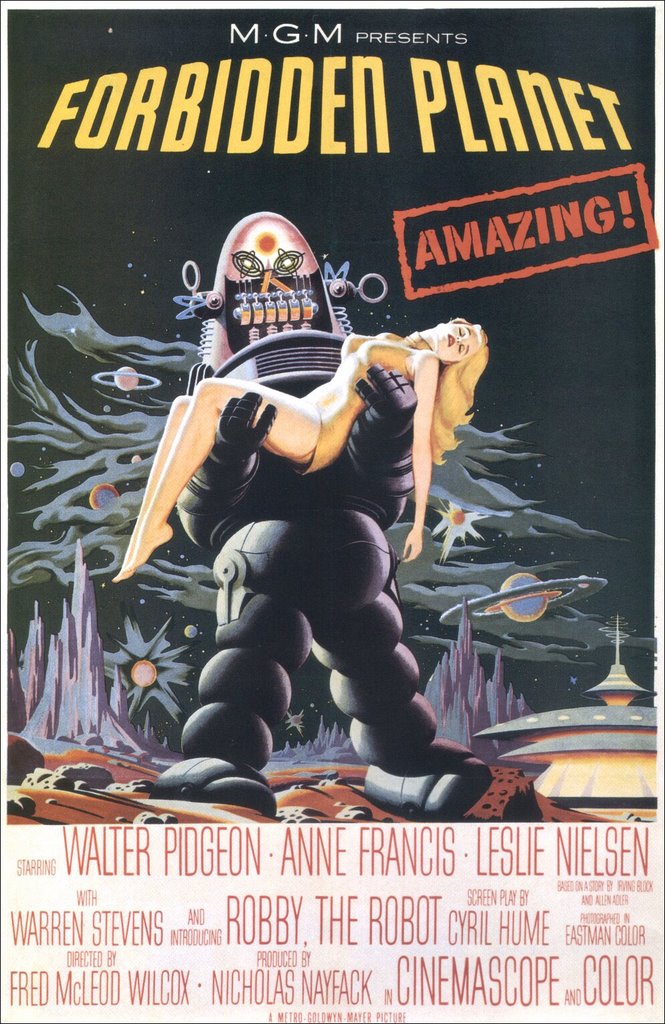
In 2257, the crew of United Planets Cruiser C-57D, led by Cmdr JJ Adams (Leslie Nielson), Lt Farman (Jack Kelly) and Dr Ostrow (Warren Stevens),come to check on Altair-4's first settlers. All have been killed, except the mysterious Dr. Morbius (Walter Pigeon) and daughter, Altaira (Anne Francis),by an invisible being, per Dr Morbius. Adams is skeptical of Morbius' story, his palacial setting, Earth-type animals seen, & Robby the Robot, who first greeted the crew.

Adams states he'll have to return Morbius to Earth, but Morbius suddenly gives Adams, Farman & Ostrow an underground tour of still-operating technology, left by the Krell, inhabitants who disappeared 2000 centuries ago. Morbius explains that many devices are controlled by the mind & that even his has expanded.
Adams & Altaira realize they have an attraction, which Morbius is aware. In a night attack on the ship, an invisible creature wipes out half the crew including Farman. Adams & Ostrow confront Morbius, who is unaccepting of Adams' theory that Krell technology is providing the invisible attacker, conjured up by Morbius' innermost mind - the id -to drive away Adams & his crew. Robby alerts that ' something ' is coming, & the group escapes into the underground Krell maze as Morbius' house is torn apart by something invisible.
Thursday, June 01, 2006

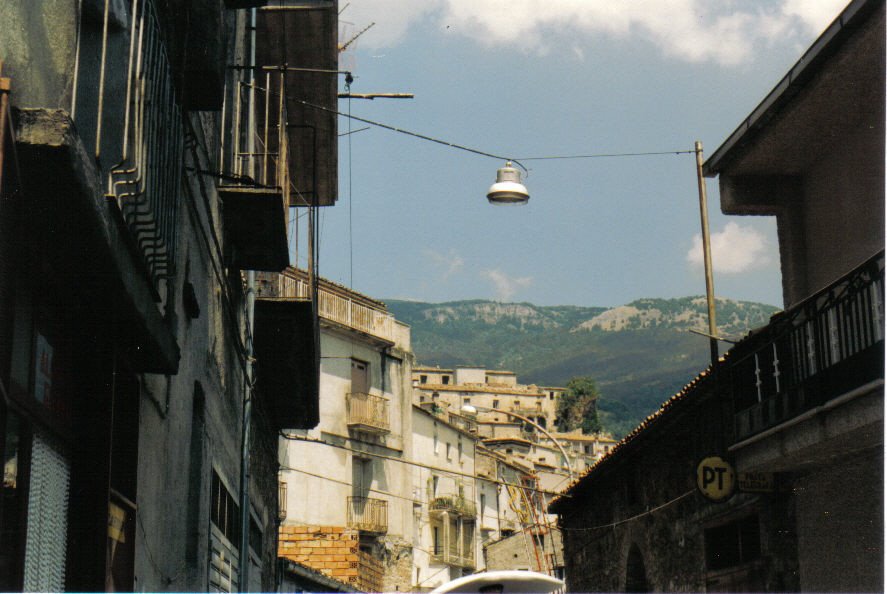
Subscribe to:
Posts (Atom)