Tuesday, August 08, 2006

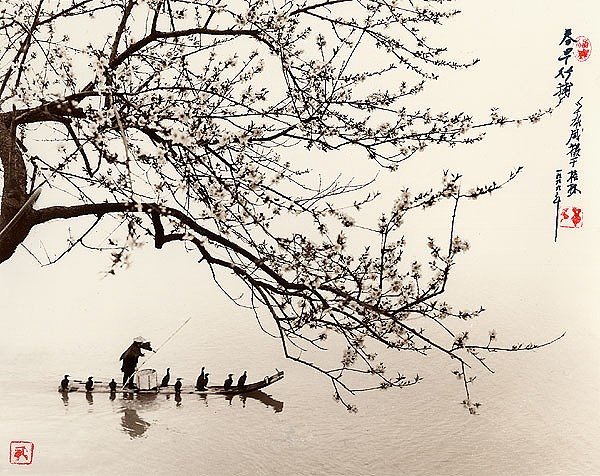
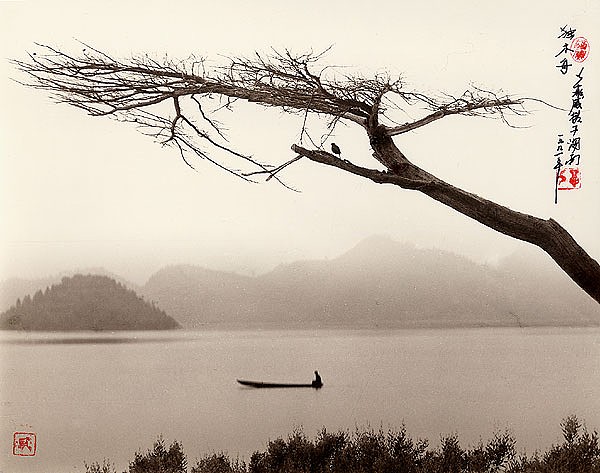
For The Birds -


Don Hong - Oai @ 2001




The Long & Short of It

Apparently, according to Bill Knott "...short poems are not real poems, are they in the Norton, is there a short poem in David Lehman's anthols, he's the boss of poetry what he says goes and he says no to short poems, does Louise Gluck write short poems of course not, ergo the short poem is not a legitimate mode or form, ..."

Some of my best work (such as it is) might be considered abbreviated. Is in fact the short poem really that easily dismissed by poetry editors or is this a format that is ideal for the 21st century attention spans? I had always been taught that the economy of words in poetry is something "devoutly to be wished". Shouldn't a poem be measured on a PPL (Punch Per Line) or PPW (you figure it out) basis?

Apparently some people agree with me & thus they have launched a quarterly magazine devoted to mico poems & micro fiction - called you guessed it :

INCH

Submission Guidelines

Poetry: We are looking for smart, complete poems one to nine lines in length. Don't send us a good line or three-- send us a complete poem that bites, resonates, or sleeps with giants. Submit one to five poems with a cover letter. You may include more than one poem per page provided that you insert ample space in between. We do not accept previously published work or simultaneous submissions. Submit your work to Inch because it belongs in our magazine, not because you're desperate to place it somewhere. All rights revert to the author upon publication, though we will occasionally ask if we may reprint poems in our double-sized spectacular issues. Pays three copies. Submissions that include poems longer than nine lines in length will be read and ignored.

Fiction: Flash fiction. Microfiction. Call it what you will; Inch publishes the finest stories of 750 words or less. Submit one to three stories for consideration. Include a cover letter. All rights revert to the author upon publication, though we will occasionally ask if we may reprint fiction in our microfiction bonanza issues. Pays three copies.

Submissions should be addressed to the fiction or poetry editor's attention. Include SASE. Mail submissions to:

Inch / Bull City Press
1217 Odyssey Dr.
Durham, NC 27713

E-mail submissions are not accepted.
-------------------------------------------

Now, excuse me, I'm off to write some narrative poetry!

Monday, August 07, 2006

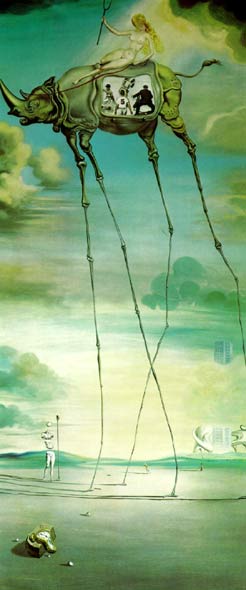
Celestial Ride


Salvador Dali - 1957

oil on canvas

Saturday, August 05, 2006

On The Right to Write Poetry

“I know I can’t write a poem. I have no right to write a poem. Mark Strand has the right to write a poem, not me. He went to Yale; he lives on the yacht of his youth. Me, I grew up in an orphanage, no family, no money, no “educational opportunities.” No background, no breeding. Scum like me can’t write poems. …Lower-class scum, menials like me have no right to write poetry. The occasion of a poem? You wanna know the fucking occasion? There is none for me. Strand and Williams and Pinsky et al. have “occasion.” I have no occasion.”
----------------------------------------------------------------------------Bill Knott

In the recent interview conducted by Robert Arnold - (editor of the on-line journal Memorious) - with Bill Knott, I’ve come across one of the most caustic diatribes denouncing the world of poetry that I’ve read recently. It is based on (if we are to believe the rhetoric) certain accomplishments he has failed to realize. But after considering his invective it appeared that there was in fact a flaw in his logic.

Knott comes to the conclusion that he is a failure due to what he states are irrefutable facts. i.e:

1-The Guggenheim Award is valueless since it has been given to “no-names”.

2 - It took him 35 years to receive award whereas other recipients achieve this in less time.
3 - Not selected for BAP (Best American poetry) or any other anthology.
4 - Books of poetry have not won any award of any type.
5 - Never invited to judge book contest.
6 - Received tenure at 55 years old, fifteen or twenty years after the successful poets of my generation
7 - The successful contemporary USA poet must have a publisher who stands behind and supports them:
8- Poets work must be in print and remain in print:
9 - Daniel Halpern will ask the successful poet to judge a book in his National Poetry Series:

Conclusion: These criteria are not matters of opinion, points of critical debate; they are factual data. Add them up and they measure failure.

I do not intend to argue here whether or not Bill Knott is a failure at poetry. That is a moot point. Most aspiring poets would gladly trade poetic places with him. The point is that poetic success is measurable in gradations and not in either absolute poetic triumph and/or defeat. The more interesting upshot of the above quote & the Memorious interview is that Knott appears to imply by his responses that success at poetry is determined by socio-economic status. His statement implies that an upper-class poetic voice is acceptable & viable whereas a lower-class poetic voice falls on deaf ears when it comes to the literary establishment.

Does in fact “Noblesse Oblige” give the poetic dilettante entitlements that it denies a lower-class counterpart? Are poets with poor & untraditional backgrounds really denied access to the higher rungs on the ladder up the poetic hierarchy? Are an MFA and proper breeding sufficient variables leading to an equation ensuring poetic success?

Of course to statistically determine if this assertion were true, it would entail conducting an in-depth study of the socio-economic backgrounds of published poets in various poetic journals; poets who received poetic awards; received tenure; have books published (& remain in print) by mainline publishing houses & be selected for renowned anthologies. To my knowledge such a study has not been engineered by any social scientist. It might be interesting though to see if any of Knott’s allegations hold water!

Bill Knott On:


Vanity Books
  • Vanity books can’t be classified as publications.

  • And one of the chief dangers. Vanity publishing is costly not just in terms of money. Its profligate habits can lead to the loss of judgment and value. It can mislead: it can cause me to be satisfied with work which is less than my best. I become self-indulgent, lazy; my standards are lowered. An outside editor would not accept what I’ve let pass.

  • I intend to vanity-publish all my work on my blog, eventually, and to offer there my self-pub books in PDF files free to anyone who wants them. The “print” alternative has become impossible for me. In short, it’s my failure as a print poet that has led me to the Web. I wouldn’t be blog-publishing (vanity-publishing, PDF-publishing) if I had been successful as a print poet.

Writing Poetry

  • I once dreamed of writing a line that I could put into every poem. A line that would fit into every poem I wrote, that would not be out of place no matter what the poem was.

  • The occasion of a poem? It makes me think of that quote from Henry James: “We work in the dark—we do what we can—we give what we have. Our doubt is our passion and our passion is our task. The rest is the madness of art.” Doubt seems to be my normal state which the poem or its origin suddenly and briefly overcomes. I know I can’t write a poem. I have no right to write a poem. Mark Strand has the right to write a poem, not me. He went to Yale; he lives on the yacht of his youth. Me, I grew up in an orphanage, no family, no money, no “educational opportunities.” No background, no breeding. Scum like me can’t write poems. After his Ivy League education, C. K. Williams lived in Paris on a trust fund for ten years while he wrote his first book; me, after high school and two years in the army I worked as a hospital orderly while I wrote my first book. Lower-class scum, menials like me have no right to write poetry. The occasion of a poem? You wanna know the fucking occasion? There is none for me. Strand and Williams and Pinsky et al. have “occasion.” I have no occasion.

American Poetry

  • Poetry is so disesteemed and undervalued in this country that lots of poets compensate by assuming self-defensive repressive stances that internalize the hatred and scorn directed towards them. Poetry is disdained as trivial and sordid by society at large, by Puritanical political traditions. And poets respond often by considering these criticisms as valid, and try desperately to answer them and refute them by the high seriousness of their work. Their answer to being scoffed at by those above is to create a similar hierarchy in the sub-realm of poetry, in which its lower elements (the proletarian comic modes) are rejected and despised.

  • (“American” poetry is an illusion. It doesn’t exist. It never existed. “American” poets who write in English are Colonials, Diasporics, Offshoots, Sub-branches.)

Role as Poet

  • But don’t you understand that that inability to commit to an esthetic is the root of my failure as a poet? It’s my lack of courage, really. I’ve been such a coward. Look at [Charles] Simic and Tate and compare them to me. Their courage and persistence, as opposed to my fear and wavering. Their lifelong devotion to a style. My cowardly abandonment, my desertion of every possibility. Jack of all modes, master of none, that’s me.

  • “The same kind of poem from a particular poet” is what defines a strong poet, the opposite of a dilettante like me. Philip Levine is a great poet because he has had the courage and the strength to maintain his voice and his stylistic convictions through a lifetime of effort. Ditto Simic, Tate, [Sharon] Olds and others.

  • One must create an established coherent poetic personality to be successful. And one must stick to that chosen persona or edifice. I don’t see Larkin ever deviating from his. As you read his Collected [Poems] you never suddenly find him trying to write something like [Ted] Hughes’ “Crow.” But turn my pages and you’ll find me trying to be [Karl] Krolow on one and Parra on the next. That’s why I’m a failure, and why I have come to the elephants’ graveyard of failure, the Web, to publish my poems. I’m posting all my poetry to my blog because ipso facto I have failed as a print poet. Facts are facts. I can’t console myself with spurious theories that will “demonstrate” anything I want them to.

Socialization, Self-Identification & Poetry

  • Robert Arnold: "You use class as a metaphor a lot, it seems, and much has been made of your background—from the orphanage to your time in the army and then afterward as a poor hospital orderly. That time in your life seems almost mythological at this point, with Charles Simic and James Wright both writing anecdotes about it. How much does class, and your background specifically, figure into your identity as a poet?"

  • My identity as a poet doesn’t exist, due to the class background you speak of. Every child at the orphanage knew they were on an assembly line that would shoot them out into the bondage of lower-class robot-slots; army, factory, the meniality of a desperate dead-end life….

  • Extra added attraction: When I was 15 years old [1955], the orphanage sent me to the state insane asylum at Elgin, Illinois, where I was incarcerated for a year. ...How I survived that hell I’ll never know, and in fact most of my time there I have blanked out of my mind. (Need I mention there was no schooling facility, no educational activities provided to me and the other teenagers there. Nor were we segregated or separated or safeguarded in any way from the general adult population, some of whom were psychotically harmful both to themselves and others. Yes, I can recall being beaten and pushed around and abused in the usual manner of such places.)

  • So what fucking “identity as a poet”? I don’t have an identity as a human being, much less a poet.

  • But what the hell, on the other hand, maybe the state insane asylum ...maybe that shit-hole wasn’t any worse really than Exeter or whatever prep-school in which Pinsky and Strand and Bidart and Charles Wright and C.K. Williams and William fucking Matthews were also suffering the traumas of their teen-angst years at the same time as me, back there in 1955….

  • When I met Philip Levine in 1969, after my first book had been published, he was a tenured professor at Fresno State; I had spent the previous ten years earning a living as a menial hospital orderly/ bedpan jockey. Levine’s written 9,000 poems about the what, the one or two summers he worked as a manual laborer or factory hand, but I’ve never written a single line about my orderly decade. Nothing, no poem, no fragment of a poem about when I was fifteen years old incarcerated in the Elgin, Illinois, state insane asylum... Out of my “experiences,” barely nothing has emerged. Why? The answer is very simple: Levine is a great poet, and I’m not. He’s had the strength and the courage to remain open to and to retain his humanity, which I was not able to do. I’ve failed in every way to live up to that task.

  • I wonder if my internment as a poet has been much different from those earlier incarcerations,... I don’t think so—it seems to me that the authorities of poetry, the overseers, the supervisors of poetry, have treated me with the same disdain and contempt and indifference as did the authorities of those other institutions. Maybe that’s why I became a poet, to ensure that I would continue to receive the brutality and neglect I had become accustomed to in my youth.


The Effect of Poetry

  • I regret everything I had to do with poetry in my life. My involvement with it has brought nothing but unhappiness and bitterness.

  • Maybe I could be thankful to have survived the unhappiness of the past if the unhappiness of the present wasn’t overwhelming me.

  • I’d be happy to pay the price of the experience if the resulting poems were worth it, but they aren’t.

------------------------------------------------------------------

From: Robert Arnold - An Interview with Bill Knott - Memorious 6 - June 2006

Friday, August 04, 2006

Marge Piercy


Visiting a dead man on a summer day

In flat America, in Chicago
Graceland cemetery on the German North Side.
Forty feet of Corinthian candle
celebrate Pullman embedded
lonely raisin in a cake of concrete.
The Potter Palmers float
in an island parthenon.
Barons of hogfat, railroads and wheat
are postmarked with angels and lambs.

But the Getty tomb: white, snow patterned
in a triangle of trees swims dappled with leaf shadow,
sketched light arch within arch
delicate as fingernail moons.

The green doors should not be locked.
Doors of fern and flower should not be shut.
Louis Sullivan, I sit on your grave.
It is not now good weather for prophets.
Sun eddies on the steelsmoke air like sinking honey.

On the inner green door of the Getty tomb
(a thighbone's throw from your stone)
a marvel of growing, blooming, thrusting into seed:
how all living wreathe and insinuate
in the circlet of repetition that never repeats:
ever new birth never rebirth.
Each tide pool microcosm spiraling from your hand.

Sullivan, you had another five years
when your society would give you work.
Thirty years with want crackling in your hands.
Thirty after years with cities
flowering and turning grey in your beard.

All poets are unemployed nowadays.
My country marches in its sleep.
The past structures a heavy mausoleum
hiding its iron frame in masonry.
Men burn like grass
while armies grow.

Thirty years in the vast rumbling gut
of this society you stormed
to be used, screamed
no louder than any other breaking voice.
The waste of a good man
bleeds the future that's come
in Chicago, in flat America,
where the poor still bleed from the teeth,
housed in sewers and filing cabinets,
where prophets may spit into the wind
till anger sleets their eyes shut,
where this house that dances the seasons
and the braid of all living
and the joy of a man making his new good thing
is strange, irrelevant as a meteor,
in Chicago, in flat America
in this year of our burning.
-----------------------------------------------------------
From: "Circles on the Water: Selected Poems of Marge Piercy"
Alfred A. Knopf (1982)

Thursday, August 03, 2006

The Buzz


Mosquito
by Alex Lemon

You want evidence of the street
fight? A gutter-grate bruise & concrete scabs—
here are nails on the tongue,
a mosaic of glass shards on my lips.

I am midnight banging against housefire.
A naked woman shaking
with the sweat of need.

An ocean of burning diamonds
beneath my roadkill, my hitchhiker
belly fills sweet. I am neon blind & kiss
too black. Dangle stars—

let me sleep hoarse-throated in the desert
under a blanket sewn from spiders.
Let me be delicate & invisible.

Kick my ribs, tug my hair.
Scream You’re Gonna Miss Me
When I’m Gone. Sing implosion
to this world where nothing is healed.

Slap me, I’ll be any kind of sinner.
----------------------------------------------
from Mosquito: Poems Tin House Books (August 28, 2006)

"Mosquito" is Alex Lemon's first collection of poems. His poems have appeared or are forthcoming in numerous magazines including Tin House, Denver Quarterly, AGNI, Black Warrior Review, Gulf Coast and Pleiades. His translations (with Wang Ping) of a number of contemporary Chinese poets are forthcoming in Tin House, Artful Dodge, New American Writing and other journals. Among his awards are a 2005 Literature Fellowship in Poetry from the National Endowment for the Arts and a 2006 Minnesota Arts Board Grant. He is the assistant editor for LUNA: A Journal of Poetry and Translation and is a frequent contributor to The Bloomsbury Review. Currently, he teaches at Macalester College in St. Paul, Minnesota.
---------------------------------------------------------------------

P.S. I didn't realize that C.Dale posted the same poem today. However, I firmly believe it deserves the exposure.

Wednesday, August 02, 2006

Sunday, July 30, 2006

Urban Elm 4


---------------------------Bill Schwab

Thursday, July 27, 2006

In Search of.... a Title!


What do you think is the best title for my chapbook?
1. The Fear of Open Faces
2. Malinconia
3. Ferraris And First Communions
4. In a World of Perfect Bones
5. The Gathering
6. The Art of Poetic Cleansing
7. Le Cercle D’Ennui
8. The 30 Hz Hypothesis


Wednesday, July 26, 2006

You Gotta Minute...

I just received news from Sam Rasnake: editor of Blue Fifth Review that my poem "The Gathering" is slated to be published in the summer issue. Apparently the first e-mail that he sent me bounced. But Sam didn't give up and sent me another. Now hopefully, the e-mail I sent him got through. Thanks for your perseverance, Sam.

Tuesday, July 25, 2006

If I Had a Hammer………I’d Hammer Out a Chapbook Manuscript

Alright, so after weeding out more than half a dozen poems or so that just didn’t cut it - I’ve got about 25 poems that I’m comfortable sending out into the gauntlet of publishers and publishing houses. But it’s hard sending out these ingénue pomes out onto the literary seas without a rudder (so to speak). They need a captain at the helm that can steer the course to publication. I was imagining myself as Humphrey Bogart from “African Queen”, but am probably closer to being a Captain Merrill Stubing instead!

In an attempt to fulfill my navigational duties I’m trying to discern a common theme that runs throughout. The best I could come up with is that it was all written by the same schmuck. So I really tried to get into my work. Translation: I made hardcopies threw them on the floor and moved them around from one pile to another. This served as both meditation and my daily exercise. And as a bonus the hardwood floor got buffed.

I stared at them so long; I imagined them staring back. Then a thought popped into my head. This condition can be dangerous as thoughts do not generally make their way into my synaptic network due to the misfiring of my dendrites. (I knew I should have changed those spark plugs at 40K.)

After the synapses finally fired, what I came up with is that all poetry usually falls within broader categories. Duh! So why not just lump the poems according to their subject matter? I came up with this schema:

Death & Mysticism
Faith & Religion
The Surrealistic
Significant Others
The Human Condition
Self-Identification

You’ll notice that nature doesn’t play a big part in my poetry writing. It’s not that I’m not a naturalist or don’t appreciate nature; it’s just that the closest I get to nature is my father’s San Marsano tomato plants. Check that...Make that my father's San Marsano tomatoes!

What I’m wondering - just about now - is what other poets in the blogosphere primarily write about. Do we inevitably all end up writing about the same things? Hmm… Maybe Jung was on to something after all!

Wednesday, July 19, 2006

Arabesques Review Vol. II Issue 02


Arabesques Review Vol. II Issue 02 - ($13.95)

Includes writers such as Bill Teitelbaum, Sheila Murphy, Joseph Farina, Gordon Massman, Brent Powers, Ross Clark, Cortney Bledsoe, Ron Savage, Thomas Aiello, Steve Mayoff, JA Tyler, Nick Bruno, David Taylor, Owen Elmore, Davide Trame, Socorro Venegas, Les Merton, Carl Palmer, Mary Hamrick, Michael Blottenberger, Christopher Woods, Penny Feeny, Jose Manuel Sevilla, Jai Clare, Gary Lehmann, Paul Murphy, Leonardo Guevara Navarro, Azza El Wakeel, Christopher Woods, Lucia Leao, Jason Heroux, Dimitris Kraniotis, Domenico Capilongo and Arash Farzanah all appear in the pages of Arabesques' new special "Anthology" issue. "Identities" is a unique "cultural book" which has been published with the contributions of many talented artists from all corners of the planet.

"Bodyfall"

Michael Schippling - circa 1996-7

Small dye sublimation prints created using Adobe Photoshop

Saturday, July 15, 2006

In My Home Town


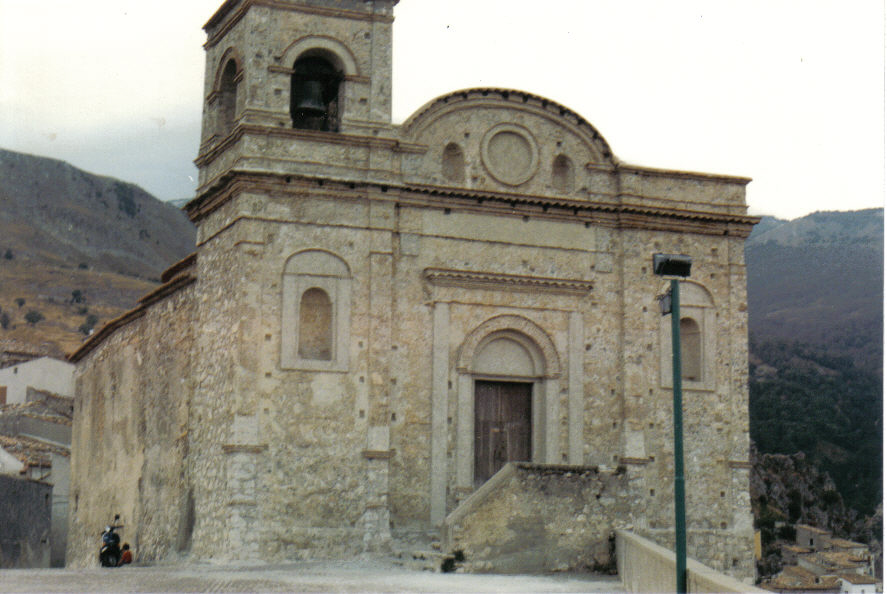
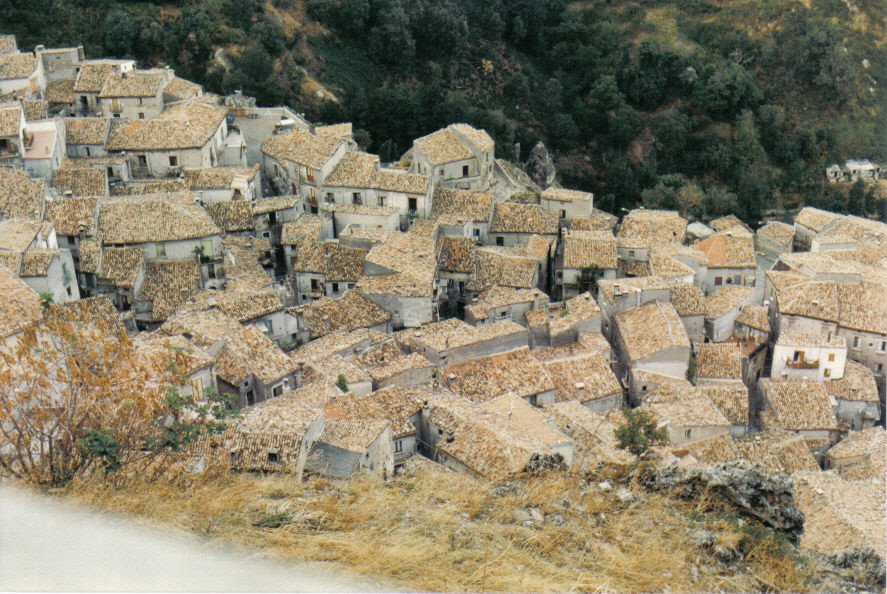
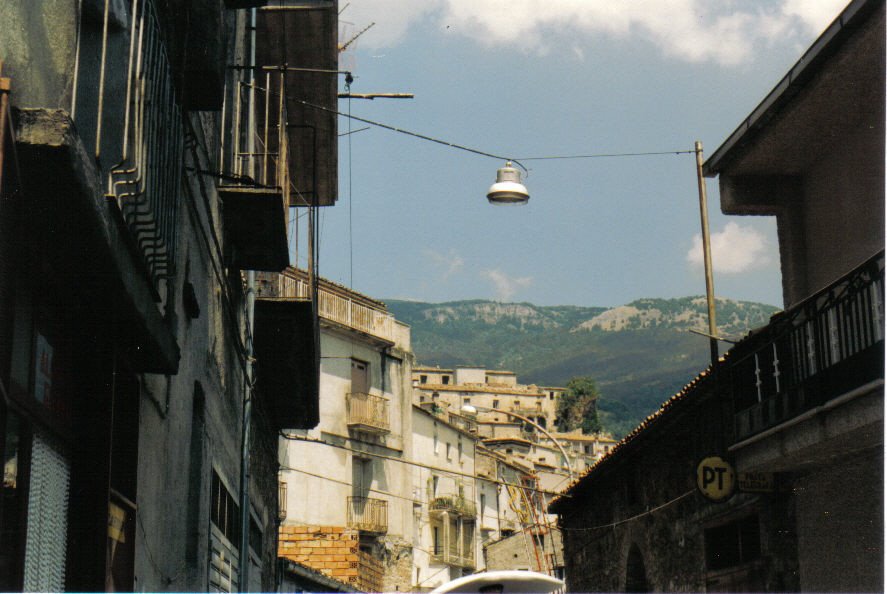
San Donato di Ninea

Wednesday, July 12, 2006

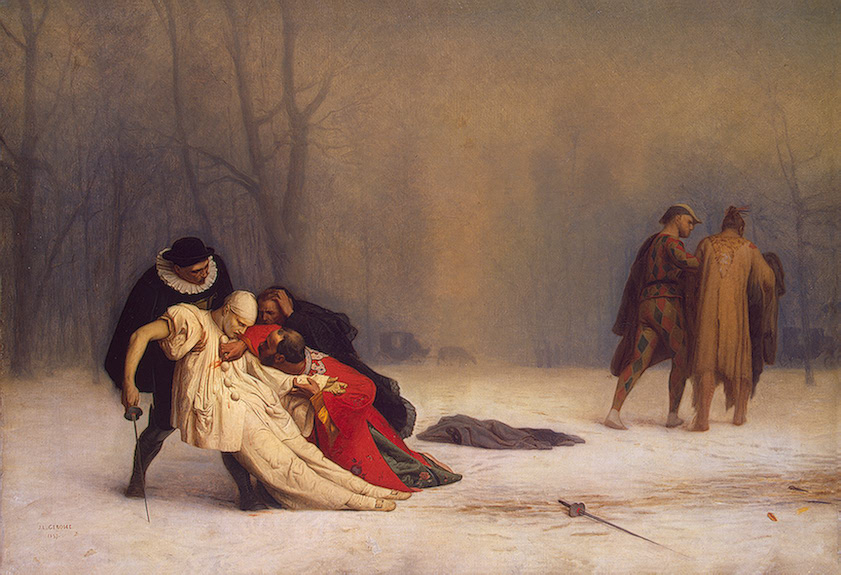
Duel After a Masked Ball


Jean-Leon Gerome (1857)

Tuesday, July 11, 2006

I’m Still a Virgin…


When it Comes to Publishing a Chapbook or a “Full Length” Collection of Poetry.

By the way what the hell is a “full length” collection anyway? Are we talking poems or pages here? Does one really long poem (100+ pages) constitute a “full length” collection or not? How about 300 haikus? What about the term “chapbook”? The term always sounded kind of uncomfortable if you ask me. It sounds as if I should be applying some kind of balm to it; or take the poor thing to see a dermatologist. Never mind…. In any case, I now have enough published poems to put together a manuscript for a “chapbook”.

Thing is I’ve only been at this “PoBiz” for about five years. Furthermore, I never thought when I started out that I’d ever even be published in poetry journals, let alone entertain the prospect that my work might appear in a book of poetry or an anthology. For me it has always been about the poetry. I never really was in a hurry to publish a chapbook or collection, just for the sake of publishing! I mean – yeah… I’d like the look of my moniker imprinted in bold letters on several hundred copies of an expertly bound, exquisitely presented chapbook. But then again who wouldn’t?

This has been an interesting journey. On my return from Italy in 2000, I started out posting & critiquing poetry on-line. The venues I frequented are too many to name here. But it wasn’t until I started posting at the Gazebo that I really got a kick in the proverbial poetic shins. The experience kick-started my enduring interest in poetry. During the 3 odd years that I participated there I published quite a few poems. I am not a prolific writer, by any stretch of the imagination, but I was fortunate enough to have most of my poems find a home as it were.

Now 35+ published poems later, I feel like I have enough material for a chapbook. Problem is - & I’m serious about this – I really need some help with putting together a manuscript. The poems only span five years of writing but I believe that my writing style & voice really changed over that short period of time. Therefore, I’m not really sure if & how to incorporate these varied stages of development into a marketable manuscript. So, if you’re interested in a challenge, boy have I got one for you!

------------------------------------------------

Addendum: For readers requiring further explication of the marketing of the Chapbook - the following article from Pudding House Press might be of interest: Chapbooks — Flying Like Hummingbirds Exciting the Air Around Them (MARKETING YOUR CHAPS WITH LIMITED IF ANY HELP FROM THE PUBLISHER) can be found in the main directory under the heading: "Chapbook Marketing a How-To"!