I don't know about you but I've got several poems in my Poetry in Vitro file that I know are ready for my desktop recycle bin and binary oblivion. (Sort of like that piece of bacon that's all crooked and deformed - under the perfect stack of maple-smoked bacon.) But I just don't have the heart to put them out of their rhetorical misery. The majority of them were written early on (which for this poet means about five years ago). I'm a late bloomer - you got a problem with that! I like to think that my poetry has grown by leaps and bounds...Ignorance is bliss and all that.
So your assigment should you choose to accept it is to read the poetry (torture I'm sure) and determine if it is salvageable or not. This post will self-destruct in 24 hours or not! As always should your position be compromised I will deny any knowledge of your existence. Good luck!
Judgement has been rendered - thanks!
Wednesday, September 13, 2006

Monday, September 11, 2006
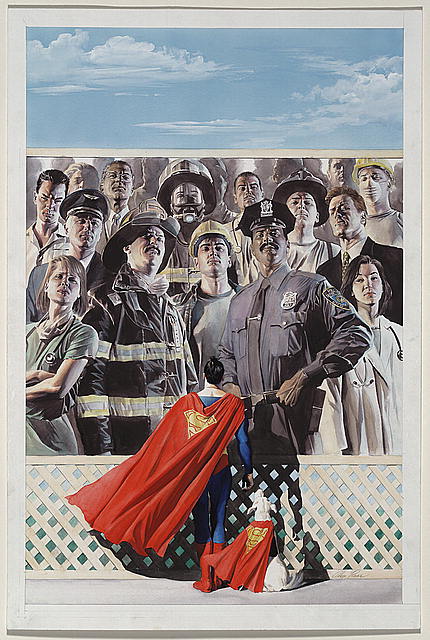
Louise Bogan
Poet Laureate : 1945-1946
Knowledge
Now that I know
How passion warms little
Of flesh in the mould,
And treasure is brittle,--
I'll lie here and learn
How, over their ground
Trees make a long shadow
And a light sound.
---------------------------------------------
from Body of this Death: Poems (1923)
Knowledge
Now that I know
How passion warms little
Of flesh in the mould,
And treasure is brittle,--
I'll lie here and learn
How, over their ground
Trees make a long shadow
And a light sound.
---------------------------------------------
from Body of this Death: Poems (1923)
Saturday, September 09, 2006
Friday, September 08, 2006
Thursday, September 07, 2006
Raising the Barr… Again
It seems that whenever I read an article on the state of poetry today the author inevitably dwells on the negative. They fixate on how poetry today is suffering from le grand malaise of apathy on the part of the reading public. I have yet to read a treatise on what is working well in today’s poetic scene and what is worthy in today’s state of poetry. Is all poetry truly tired and stagnant? Are all poets becoming more and more alike, surviving vicariously in a symbiotic, albeit poetically incestuous relationship with other poets? Have poets truly and completely lost the interest to even write for a general public? Would this purported public even care if they did? I have no answers to these questions.
What I do know is that I write for myself. I do not write & publish to acquire tenure; to impress my poet mentor; make my bones in an MFA program; receive fellowships, grants, and other subsidies or to garner poetry prizes that I can stick into my poetic hat. I agree that I am totally narcissistic when it comes to my poetry, but I also care a great deal about craft and I envy the MFA student that can devote so many hours in a day to poetics. I would like to be so steeped in poetics that I might see elements of poetry in every objectification that I encountered on a daily basis.
And yes in response to Barr’s point that almost all poets end up teaching, I too have worn the hat of teacher. But I have never defined myself as such. It was merely a means to an end. (Not that it left a discernible bad aftertaste in my mouth. Actually, I rather enjoyed it!) But I have never defined myself by that which engaged me in a remunerative activity. My educational background is in Sociology (M.A.) but I do not consider myself sociologist either. I refuse to let my social roles confine and pigeon-hole me. And so too, when it comes to my role as poet - (which is admittedly rather a small role in the grand scheme of it all), I refuse to be stereotyped.
Nature vs. Nurture & Poetic Careerism
There has been a longstanding point of contention among social scientists as to which variable: (nature or nurture) is more instrumental in determining the behavior and personality of the individual. What truly makes us who we are? Is the poet born or socially molded and socialized into one? Is the predisposition to develop into a poet based on our genetic or social makeup?
Barr clearly indicates that he feels that nature is the determinant factor in the poet’s evolution. Craft can be learned via MFA programs but we already come to these programs as writers. If anything these programs seem to mold the student in the likeness of the program’s mentor. Ergo; his assuredness that the next poetic Messiah will probably not be an MFA student. Whereas this lends an infinitesimally slight optimism to my personal history as poet, I cannot wholeheartedly accept this premise without any corroboration.
Nonetheless, I do agree that,” The creation of art is not a matter of fellowship. Writing a poem is a fiercely independent act. It is the furthest thing from mentors, residencies, and tenure.” The need to write does not (at least in my case) ever arise during a social event. It is a “sullen craft” that I ply alone. The words & elements of the “poem in vitro”, ebulliently bob to the surface of the conscious mindset when the need arises. And, yes, the urge to write is often something that I must assuage. Having said this I might, however, add that revision & critique is perhaps better suited to “fellowship”.
Write What You Know
I have always contended that any attempt at writing from another POV completely alien to one’s cognitive mindset is necessarily tinged by the subjective. We cannot help but imprint on all that we create the unique stamp of our subjectivity. To quote Anais Nin: “We don’t see things as they are, we see things as we are.” Our socio-cultural perspective precludes any true objectivity. As a social scientist conducting social research the quicker that we come to grips with this reality the more accurate our studies become.
Writing poetry appears to be no different. When Barr indicates that we must live broadly to write boldly I have a tendency to agree with him. As he posits: “…the poem one might get from a poet strolling past a construction site versus the poem one might get from the poet who is pouring concrete” will inevitably differ. Certainly the latter poet can bring more to the poetic table that the former. But where I disagree with Barr is in the extent that one must go to, to attain ”material” conducive to stimulate the creative juices. Writing about something or an event that is out of the ordinary in our reader’s life experience is simple enough. Writing about the commonplace in some profound way which deeply resonates with our reader is the more difficult of the two tasks. And it is precisely this incisiveness which demarcates the good poet from the exceptional one.
Great Poets & Great Audiences
“To have great poets, there must be great audiences too,” Barr quotes Whitman. But Whitman himself, self-published Leaves of Grass in 1855, as it had not garnered the critical acclaim that he had envisaged. Another of his contemporaries Emily Dickinson never even had an audience in her lifetime, let alone a great audience.
To reach a greater audience the poet perforce must be more accessible. Yet when a poet becomes accessible such as a Billy Collins or Ted Kooser, they are usually written off by academics & critics alike. Become a “popular poet” and you are disparaged by your peers. Write for your peers and the critics alike and you are considered too high-brow and inaccessible by a greater audience. There’s the catch-22.
Furthermore, in order to even attain any modicum of success in the Po-Biz you must be published in reputable literary magazines which are inevitably edited by individuals that more than likely have attended some form of writing program & thus will have probably acquired a preference for poetry with a more academic bent. It appears to be a cycle that cannot be easily broken.
In conclusion, Barr’s recommendation that, “Groundbreaking new art comes when artists make a changed assumption about their relationship to their audience, talk to their readers in a new way, and assume they will understand.”, is not likely to be realized if the poet is too busy writing for an audience that will inevitably publish and/or acclaim them. The poet is no position to change their relationship with this audience when their poetic success is contingent on the very group that decides whether they will achieve notoriety or remain in obscurity.
What I do know is that I write for myself. I do not write & publish to acquire tenure; to impress my poet mentor; make my bones in an MFA program; receive fellowships, grants, and other subsidies or to garner poetry prizes that I can stick into my poetic hat. I agree that I am totally narcissistic when it comes to my poetry, but I also care a great deal about craft and I envy the MFA student that can devote so many hours in a day to poetics. I would like to be so steeped in poetics that I might see elements of poetry in every objectification that I encountered on a daily basis.
And yes in response to Barr’s point that almost all poets end up teaching, I too have worn the hat of teacher. But I have never defined myself as such. It was merely a means to an end. (Not that it left a discernible bad aftertaste in my mouth. Actually, I rather enjoyed it!) But I have never defined myself by that which engaged me in a remunerative activity. My educational background is in Sociology (M.A.) but I do not consider myself sociologist either. I refuse to let my social roles confine and pigeon-hole me. And so too, when it comes to my role as poet - (which is admittedly rather a small role in the grand scheme of it all), I refuse to be stereotyped.
Nature vs. Nurture & Poetic Careerism
There has been a longstanding point of contention among social scientists as to which variable: (nature or nurture) is more instrumental in determining the behavior and personality of the individual. What truly makes us who we are? Is the poet born or socially molded and socialized into one? Is the predisposition to develop into a poet based on our genetic or social makeup?
Barr clearly indicates that he feels that nature is the determinant factor in the poet’s evolution. Craft can be learned via MFA programs but we already come to these programs as writers. If anything these programs seem to mold the student in the likeness of the program’s mentor. Ergo; his assuredness that the next poetic Messiah will probably not be an MFA student. Whereas this lends an infinitesimally slight optimism to my personal history as poet, I cannot wholeheartedly accept this premise without any corroboration.
Nonetheless, I do agree that,” The creation of art is not a matter of fellowship. Writing a poem is a fiercely independent act. It is the furthest thing from mentors, residencies, and tenure.” The need to write does not (at least in my case) ever arise during a social event. It is a “sullen craft” that I ply alone. The words & elements of the “poem in vitro”, ebulliently bob to the surface of the conscious mindset when the need arises. And, yes, the urge to write is often something that I must assuage. Having said this I might, however, add that revision & critique is perhaps better suited to “fellowship”.
Write What You Know
I have always contended that any attempt at writing from another POV completely alien to one’s cognitive mindset is necessarily tinged by the subjective. We cannot help but imprint on all that we create the unique stamp of our subjectivity. To quote Anais Nin: “We don’t see things as they are, we see things as we are.” Our socio-cultural perspective precludes any true objectivity. As a social scientist conducting social research the quicker that we come to grips with this reality the more accurate our studies become.
Writing poetry appears to be no different. When Barr indicates that we must live broadly to write boldly I have a tendency to agree with him. As he posits: “…the poem one might get from a poet strolling past a construction site versus the poem one might get from the poet who is pouring concrete” will inevitably differ. Certainly the latter poet can bring more to the poetic table that the former. But where I disagree with Barr is in the extent that one must go to, to attain ”material” conducive to stimulate the creative juices. Writing about something or an event that is out of the ordinary in our reader’s life experience is simple enough. Writing about the commonplace in some profound way which deeply resonates with our reader is the more difficult of the two tasks. And it is precisely this incisiveness which demarcates the good poet from the exceptional one.
Great Poets & Great Audiences
“To have great poets, there must be great audiences too,” Barr quotes Whitman. But Whitman himself, self-published Leaves of Grass in 1855, as it had not garnered the critical acclaim that he had envisaged. Another of his contemporaries Emily Dickinson never even had an audience in her lifetime, let alone a great audience.
To reach a greater audience the poet perforce must be more accessible. Yet when a poet becomes accessible such as a Billy Collins or Ted Kooser, they are usually written off by academics & critics alike. Become a “popular poet” and you are disparaged by your peers. Write for your peers and the critics alike and you are considered too high-brow and inaccessible by a greater audience. There’s the catch-22.
Furthermore, in order to even attain any modicum of success in the Po-Biz you must be published in reputable literary magazines which are inevitably edited by individuals that more than likely have attended some form of writing program & thus will have probably acquired a preference for poetry with a more academic bent. It appears to be a cycle that cannot be easily broken.
In conclusion, Barr’s recommendation that, “Groundbreaking new art comes when artists make a changed assumption about their relationship to their audience, talk to their readers in a new way, and assume they will understand.”, is not likely to be realized if the poet is too busy writing for an audience that will inevitably publish and/or acclaim them. The poet is no position to change their relationship with this audience when their poetic success is contingent on the very group that decides whether they will achieve notoriety or remain in obscurity.
The Drone of Modern Poetry – Deuxieme Partie
(An Outline of “ American Poetry in the New Century “ by John Barr .)
Part I – The Problem with Modern Poetry
- Modern poetry does not capture the way things are
- Reality outgrows the art form: the art form is no longer equal to the reality around it.
- Poetry is missing from everyday society & public dialogue in our: classrooms; bookstores; mainstream media
- A general interested public is poetry’s foremost need
- Lacking a general audience – poets still write for one another
- Since poets cannot support themselves by writing books & selling them to the general public; they end up teaching
- Academic life removes them even further from their public
- MFA students think that poetry has something to do with credentials
- Result: increase in the quantity of a poetry that is neither robust; resonant nor entertaining; a poetry that is limited in its variety; a poetry that both starves & flourishes on academic subsidies
- Poetry has a morale problem – But art should not be only about malfunction. Poetry need not come only from impairment.
- Poetry’s limitations today come not from failures of craft but from afflictions of spirit.
- Summation: The combined effects of public neglect and careerism, then, are intellectual and spiritual stagnation in the art form. … Attitude has replaced intellect.
Part II – The Next Era
- Poetry arises from what is intractable in the human spirit.
- A dead end is the fate that awaits any poetry that is not a record of the human spirit.
- Technical innovation [in poetry] for its own sake is like the tail that tries to wag the dog.
- I do believe the next era of poetry will not come from further innovations of form, but from an evolution of the sensibility on lived experience.
Poetry As a Career
- MFA programs can make a writer more knowledgeable in the traditions and the contemporary scope of the art, more accomplished in the craft of writing, more aware of the nimbus of critical commentary which surrounds and to some extent drives the art
- However, these programs carry pressures to succumb to the intimidations implicit in a climate of careerism. They operate on a network of academic postings and prizes that reinforce the status quo.
- They are sustained by a system of fellowships, grants, and other subsidies that a reader who is not a specialist might enjoy, might even buy.
- The MFA experience can confuse the writing of poetry, as a career, with the writing of a poem as a need or impulse.
- The creation of art is not a matter of fellowship. Writing a poem is a fiercely independent act. It is the furthest thing from mentors, residencies, and tenure.
- The one valid impulse to write a poem is not to impress but to share: wonder or anger or anguish or ecstasy. But always wonder.
- For the poet a sense of wonder is prerequisite to afford the possibility of the displacement of language into fresh response.
- Will the next Walt Whitman be an MFA graduate? Somehow it seems hard to imagine.
Write What You Live & Live What You Write
- the academic life can provide a perfectly good base of experience from which to write.
- But the effect of how we live on what we write—a linkage which seems to me very under-recognized today—suggests that if everyone teaches in order to support their writing needs, it follows that the breadth of the aggregate experience base available to poetry may suffer. In fact, with a few important exceptions, no major American poet has come from the academic world.
- Poetry, like a prayer book in the wind, should be open to all pages at once.
- It is the unconscious habit of poets to wait for the poem to come to them. Most contemporary poets align their role as writer with that of witness. They think of the artist as one more acted upon than acting.
- This is not to say, of course, that great poetry cannot come out of the most meager repository of lived experience. …The point rather is that poets today don't seem even to be aware that what they write will be influenced by how they live.
- When poets come to pay as much attention to how they live as to what they write, that may mark one new beginning for poetry.
- Poets should live broadly, then write boldly.
PART III – Change is Good For The Soul & The Poet
- Poetry, in its long history, has been all things to all people.
- The lyric poem by far dominates as the kind of poem written today.
- The sole function of the lyric poem, ubiquitous as its footprint has become, is to personalize the subject at hand.
- The ubiquity of the lyric poem today, to the exclusion of other modes of poetry, is another sign of poverty in the art form.
- In the eyes of those who succeed it, an age of poetry comes to be defined at least in part by what it was not.
- If the present era comes to be viewed by future readers as a time of worthy but not compelling poetry, it will not be for failures of craft.
- I don’t agree that our culture conspires to deny us our privacy, the quiet time it takes to read a poem.
- The human mind is a marketplace, especially when it comes to selecting one's entertainment.
- I think the responsibilities of the public to poetry are nil.
- Rather, I think the responsibilities are all on the part of poetry to its public.
- Poetry, coming from the other direction, must meet a standard of pleasure as well as profundity if it is to recover its place in American culture.
- Poetry needs to find its public again, and address it.
- Every poem implies its audience; our goal is to get that poem in front of its largest intended audience.
- In a golden age of poetry the audience will not be just the workshop, where poets write for other poets, or the classroom—both of which have provided crucial sanctuary to poetry during the past half century.
- Its audience will lie also in that world of non-poetry readers who come to discover its deep sustenance. "To have great poets, there must be great audiences too," Whitman said, and then he wrote for them.
- Groundbreaking new art comes when artists make a changed assumption about their relationship to their audience, talk to their readers in a new way, and assume they will understand.
---------------------------------------------------------------------------
Source: Poetry - September 2006
Tuesday, September 05, 2006
The Drone of Modern Poetry?
"American poetry is ready for something new because our poets have been writing in the same way for a long time now. There is fatigue, something stagnant about the poetry being written today. ...The manner of it has long been mastered. Modernism has passed into the DNA of the MFA programs. For all its schools and experiments, contemporary poetry is still written in the rain shadow thrown by Modernism. It is the engine that drives what is written today. And it is a tired engine. "
--------------------------------------------------------------------------John Barr
--------------------------------------------------
John Barr is president of the Poetry Foundation and has served on the boards of the Poetry Society of America, Yaddo, and Bennington College. His books include The Hundred Fathom Curve (1997) and Grace (1999), both from Story Line Press. (From - Poetry: September 2006)
--------------------------------------------------------------------------John Barr
--------------------------------------------------
John Barr is president of the Poetry Foundation and has served on the boards of the Poetry Society of America, Yaddo, and Bennington College. His books include The Hundred Fathom Curve (1997) and Grace (1999), both from Story Line Press. (From - Poetry: September 2006)
Friday, September 01, 2006
Louise Gluck
COPPER BEECH
Why is the earth angry at heaven?
If there's a question, is there an answer?
On Dana Street, a copper beech.
Immense, like the tree of my childhood,
but with a violence I wasn't ready to see then.
I was a child like a pointed finger,
then an explosion of darkness;
my mother could do nothing with me.
Interesting, isn't it,
the language she used.
The copper beech rearing like an animal.
Frustration, rage, the terrible wounded pride
of rebuffed love - I remember
rising from the earth to heaven. I remember
I had two parents,
one harsh, one invisible. Poor
clouded father, who worked
only in gold and silver.
-----------------------------------------------
From "The Seven Ages" by Louise Gluck; The Ecco Press: 2001
Thursday, August 31, 2006
Vox Populi
What do you think might improve this Blog?
The Blog is fine as is....................................................44%
What the hell are you talking about?..............................22%
More of my poetry.......................................................11%
More poetry from poets I admire...................................11%
More on poetics............................................................11%
Wednesday, August 30, 2006
Tuesday, August 29, 2006
The Latest From Frank Matagrano

I just received a copy of “There Is Nothing to Love about Los Angeles” (Pudding House Publications: 2006) from Frank Matagrano. This is the first book of poetry in a long time that I devoured upon the first reading. There is a decidedly Whitmanesque flavor to this with titles such as: “Song of Myself in a Hotel with a View of the Pacific Ocean”; Self Portrait With Beating Heart in Your Hands”; “Self Portrait with Another Man”; “Self Portrait with iPod” & “Allowing the Body to Finally Speak”. The poems are introspective and lyrical:
From the title poem:
There is nothing to love about Los Angeles
-----except the idea of leaving
My life in your hands, the idea of you
-----carrying it from one palm tree
to the next, stepping on stars
-----pinned to the sidewalk, stopping
Then from “Song of Myself in a Hotel with a View of the Pacific Ocean”
4.
I am a historian of hallway conversation.
-----I know word for word
How a knock-knock joke begins. I am
-----an expert at doors
From “Self Portrait With Beating Heart in Your Hands”
…There are too many
people to adore and I am
embarrassed to admit
that I do not remember
the names of everyone
who touched me.
& “Self Portrait with iPod”
My song is the kind you love
-----but would never admit
In mixed company. It’s like this
-----in heaven, too, where the lung creaks
Open like a rickety screen door
Or “In the Dim Television Show”
I carry a copy of the book you read,
--------the book of poems
--you once read to me. This way, I can live
with a connection, something
-------like organ music, say Bach
--coming from an alarm clock speaker.
-------I have to be
completely alone when I read
and I have to do it right
-------before bed if I want any say
in how the dream plays
----------itself out.
Finally from “22 Minutes”
There’s a radio station that will give you
-------the world if you will give them
-----twenty-two minutes. I had five, enough
to hear about a plague of Mormon crickets
-------that turned Utah roads blood red
-----and a thousand Iranians who took to the streets
of Tehran in the name of reform for the fifth night
-------in a row. On my road - and I couldn’t
-----tell you how many times I’ve gone
down it – reception grows weak the further you drive.
There is much to like here as each poem resonates with this reader on one level or another. The poems peel away the different layers of the self like an onion being carefully sliced ply after ply revealing a different aspect of the self until along with the speaker of each poem we arrive at the inner core. We find ourselves staring at a persona we may or may not have known existed. The discovery of the self is one that is devoutly to be wished as a cathartic journey – even if it not the persona we expected to find.
------------------------------------------------
P.S.: Thanks, Frank, for sending this one out to me.
Sunday, August 27, 2006

Wednesday, August 23, 2006
Just Give Me The Facts
Got these from an e-mail that's been going around the office:
------------------------------------------------
The first couple to be shown in bed together on prime time TV were Fred and Wilma Flintstone.
------------------------------------------------
Every day more money is printed for Monopoly than the U.S.Treasury.
------------------------------------------------
Men can read smaller print than women can; women can hear better.
------------------------------------------------
Coca-Cola was originally green.
------------------------------------------------
It is impossible to lick your elbow.
------------------------------------------------
The State with the highest percentage of people who walk to work: Alaska
------------------------------------------------
The percentage of Africa that is wilderness: 28% (now get this...)
------------------------------------------------
The percentage of North America that is wilderness: 38%
------------------------------------------------
The cost of raising a medium-size dog to the age of eleven: $6,400
------------------------------------------------
The average number of people airborne over the U.S. in any given hour: 61,000
------------------------------------------------
Intelligent people have more zinc and copper in their hair.
------------------------------------------------
The first novel ever written on a typewriter: Tom Sawyer.
------------------------------------------------
The San Francisco Cable cars are the only mobile National Monuments.
------------------------------------------------
Each king in a deck of playing cards represents a great king from history:
Spades - King David
Hearts - Charlemagne
Clubs -Alexander, the Great
Diamonds - Julius Caesar
-------------------------------------------------
111,111,111 x 111,111,111 = 12,345,678,987,654,321
--------------------------------------------------
If a statue in the park of a person on a horse has both front legs in the air, the person died in battle. If the horse has one front leg in the air the person died as a result of wounds received in battle. If the horse has all four legs on the ground, the person died of natural causes.
What I'm Reading
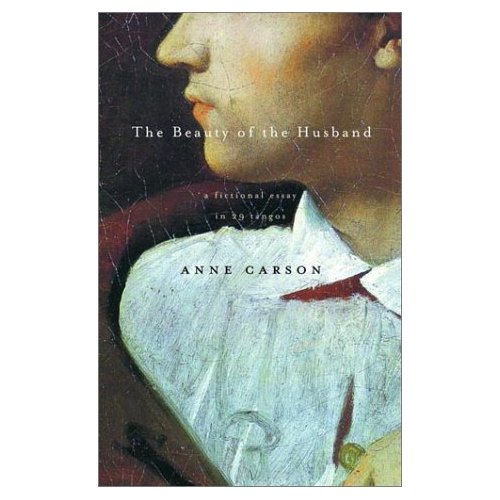
The Beauty of the Husband (a fictional essay in 29 tangos) -
Anne Carson (Knopf - New York - 2001)

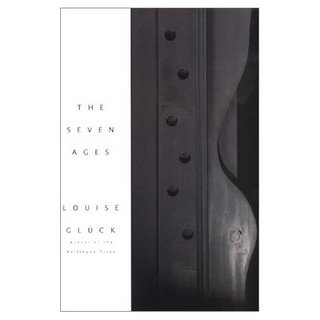
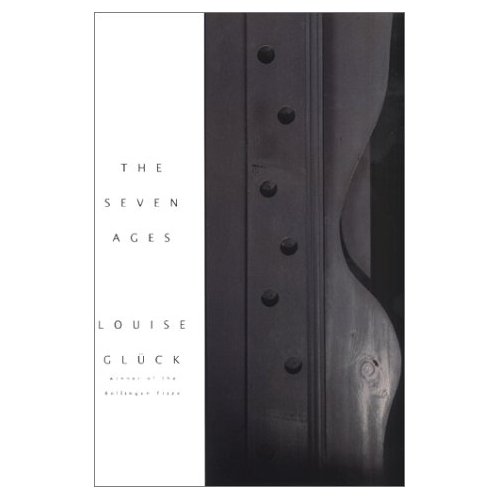
The Seven Ages - Louise Gluck
The Ecco Press - 2001
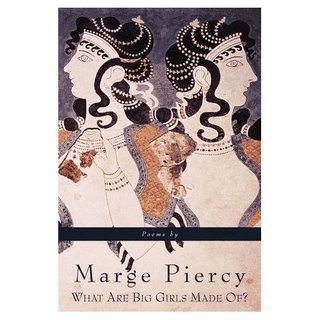
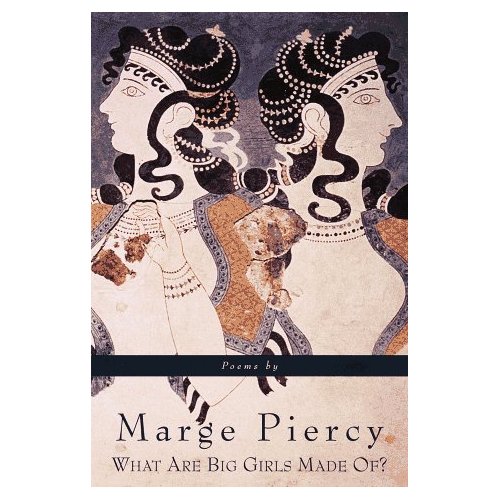
What Are Big Girls Made of? - Marge Piercy
Knopf - New York - 1997
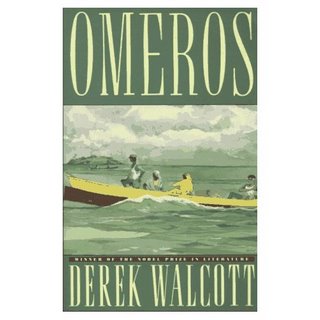
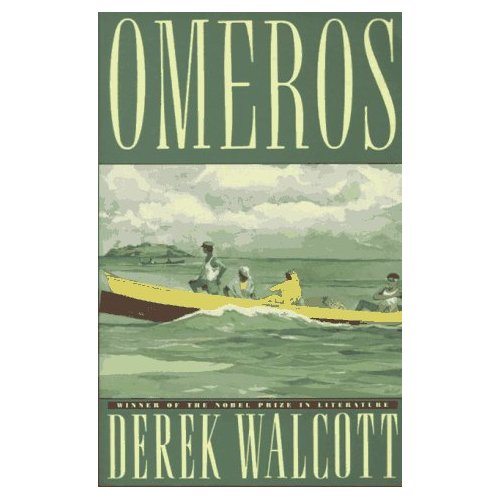
OMEROS - Derek Walcott
Farrar, Straus & Giroux - New York - 1990
Anne Carson (Knopf - New York - 2001)
The Seven Ages - Louise Gluck
The Ecco Press - 2001
What Are Big Girls Made of? - Marge Piercy
Knopf - New York - 1997
OMEROS - Derek Walcott
Farrar, Straus & Giroux - New York - 1990
Tuesday, August 22, 2006
Back to Poetry
BACK
Ruth Daigon
Back
reversing the flow
back through the looking glass
up from the rabbit hole
in from out there.
Back
into the stunned silence
of snow, a gray quiet
a stripping clean to the roots
and our breath making perfect circles.
Back
to Main Street
with summer twilight
spreading like fire in dry grass,
the soft susurrus of a slow leak in the day.
My hands
stretching like antennae
now in this street now in that.
Back
to wrap that child's universe
around me once again
and warm this woman's frame.
HOW OLD WOULD YOU BE IF YOU DIDN'T KNOW HOW OLD YOU WAS?
(Satchel Paige)
A door in a sudden garden swings open
and everything comes back.
Ma's wheedling: C'mon Cookie.
Smile for the camera.
Sing a song.
The rock I'm standing on,
smooth
hot.
The sun bouncing off my Buster Brown,
I sing and Mr. Shucket
hands me a dollar.
Pa, just up from the city,
crouches in the lake
washing his arms past
his carpenter tan.
Then, swimming with eyes shut,
he splashes everyone.
Friday, I can hardly wait for Friday.
Every other day's like
jumping up and down
on one foot in the same spot
but Friday pa arrives from the city.
Friday the butcher come to kill chickens.
Stay in front, ma yells
from the back but I crawl
through dirt underneath the house
to watch the headless chickens dance.
I spin like them,
flop in the grass,
split a blade down the middle,
whistle through it
and the sun spills its miracles on me.
If I never learned to count,
I'd be back in that feathered time
with nothing to forget,
nothing to recall,
starting all over again.
-----------------------------------------
Ruth Daigon spent most of her life in the extreme climate of Winnipeg, Toronto, New York and Connecticut where her primary activity was singing as a Columbia Recording Artist, guest artist on CBS's Camera Three, soloist with the New York Pro Musica and in concert and recital appearances. When she sang at Dylan Thomas' funeral, she never dreamed that poetry would take over your life. Her collaboration with W.H. Auden to record Renaissance poetry and music for Columbia Records also gave no hint of what was to come--editing Poets On: for 20 years, contributing to major poetry journals and winning national awards like "The Eve of St. Agnes Award" (Negative Capability). Her latest poetry collection, Handfuls of Time, has just been published by Small Poetry Press. Her previous book, Payday at the Triangle, was published by Small Poetry Press.
Wednesday, August 16, 2006

Friday, August 11, 2006

Subscribe to:
Posts (Atom)